What an AI Critique Agent Actually Checks
What is an AI critique agent? The short answer
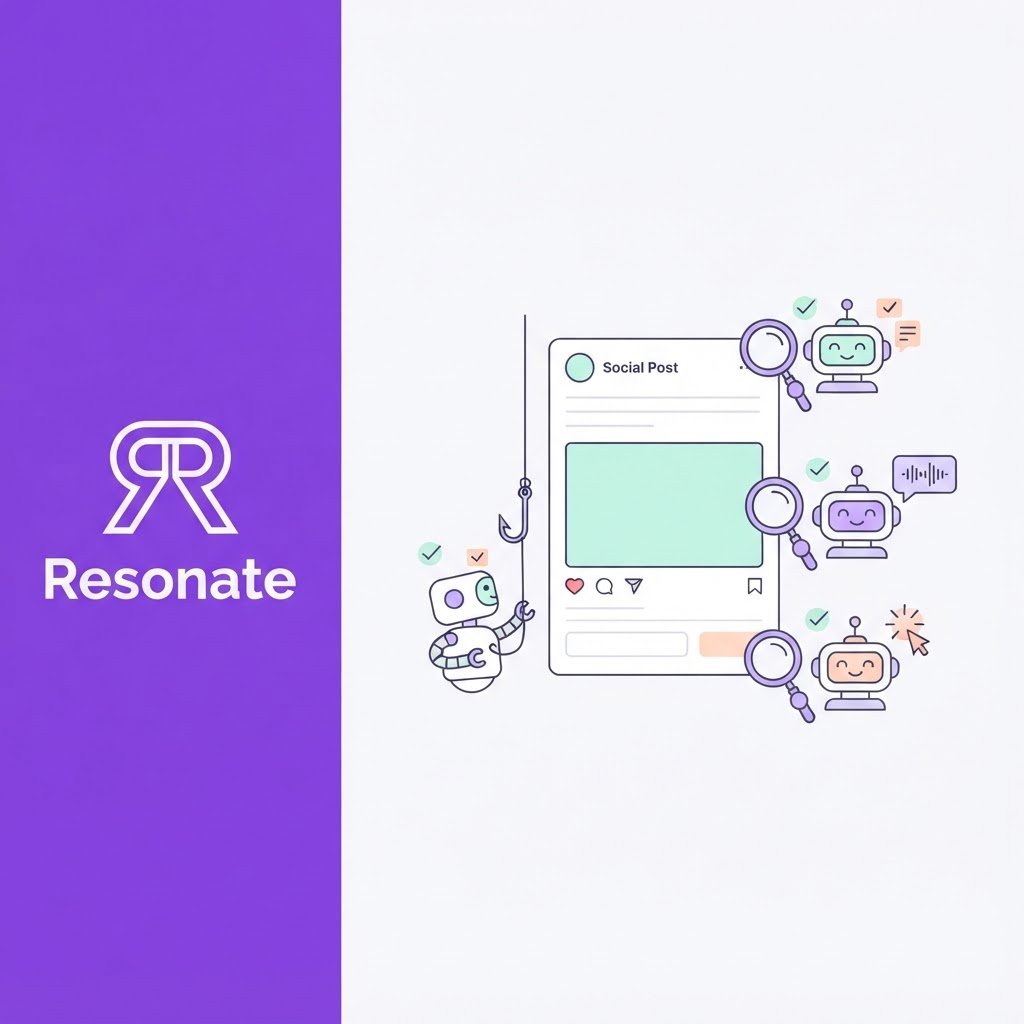
An AI critique agent is an AI reviewer with one job. Instead of rewriting your LinkedIn post, it reads the draft against a specific set of checks and tells you what to fix. Good critique systems split the job between several agents, because one reviewer asked to judge everything tends to give vague, generic feedback.
Which three checks matter most on a LinkedIn post?
- Hook: Does the opening give the right reader a reason to keep reading?
- Voice: Does the draft sound like you or like everyone else using AI?
- Virality: Is this post, as written, likely to get the right people to read, respond, and share?
What no critique agent can check reliably is whether your facts are true, whether the post is wise to publish, and whether the idea is worth sharing at all. Those judgement calls stay with you.
This guide explains why specialist agents beat a single critic, what a hook, voice, and virality agent each check, what they miss, a worked example, and how to get honest AI feedback on a LinkedIn post even without a dedicated tool. To see the feature this guide is based on, visit Resonate's AI critique feature.
Why do specialist agents beat one general critic?
Ask a chatbot to "critique my LinkedIn post" and you usually get polite, general advice: add a hook, use shorter paragraphs, and end with a question. That happens for three reasons:
- Competing goals. A single critic weighs hook, clarity, voice and reach at once, and tends to settle on safe, middle-of-the-road suggestions.
- Flattery. General-purpose assistants lean toward praising what you wrote unless told otherwise.
- Rewriting instead of reviewing. A critic asked to "improve" a draft often rewrites it, and the rewrite sounds like the model rather than you.
Specialist agents fix this by giving each reviewer one question and one standard. The Hook agent judges only the opening. The Voice agent compares the draft only with your writing. The virality agent judges only the likely response. Their notes are sharper because each is looking for one kind of problem, and conflicts between them are visible rather than averaged away. A stronger hook that no longer sounds like you shows up as a disagreement you can resolve, rather than a silent compromise.
The second design choice matters as much: agents suggest, and you decide. Each suggestion is an edit you can accept or decline, so the post stays yours.

What does each agent check?
The checklists below describe what a well-designed hook, voice and virality agent looks for. Resonate's agents follow this split; the exact checks inside any product will vary.
Hook agent: will the right person keep reading?
LinkedIn shows only the first few lines of a post before the "see more" cutoff, so the opening decides whether anything else gets read.
| Check | What it flags |
|---|---|
| Fits before the cutoff | Openings that need the second paragraph to make sense |
| Gives a reason to continue | A tension, a surprising number, a clear promise or a sharp question |
| Speaks to the right reader | Hooks so broad they attract everyone and no one |
| Delivers on its promise | Clickbait openings the post never pays off |
| Avoids worn patterns | Overused openers such as "I'm excited to announce" or "Unpopular opinion:" |
Voice agent: does this sound like you?
The Voice agent compares the draft with a profile of your writing built from your past posts and samples. It is the check general-purpose chatbots cannot do, because they do not know how you write.
| Check | What it flags |
|---|---|
| Vocabulary | Words and phrases you never use |
| Sentence rhythm | Length and pacing that differ from your usual writing |
| Generic AI phrasing | Stock phrases common in machine-written posts |
| Specificity | Places where a real number, name or moment has been replaced by a general claim |
| Stance | Hedging or enthusiasm that does not match how you usually take a position |
Specificity matters most. As one founder-focused analysis by SignalPosts argues, the concrete details that build trust are often exactly what get smoothed away when AI makes a post more "professional".
Virality agent: will this post get a response?
The Virality agent compares the draft with posts that performed well in your niche, and estimates how readers are likely to respond.
| Check | What it flags |
|---|---|
| One clear point | Posts that try to say several things at once |
| Value to the reader | Drafts about you that offer the reader nothing to use |
| Invites a real reply | Endings that only allow "Great post!" or "Agree" |
| Structure and length | Dense blocks of text, or posts much longer than the idea needs |
| Format fit | Ideas that would work better as a list, a story, or a carousel |
A virality agent estimates the likely response from the text. It cannot see timing, your audience, or early reactions, which also shape results. Our guide to predicting LinkedIn engagement before you post covers how to combine its estimate with your own data.
What can critique agents not check?
AI critique is good at craft. It is weak at judgment. Keep these checks for yourself:
- Facts. An agent cannot confirm that a number, quote, or customer result is accurate. Check every figure before you post.
- Confidentiality. It does not know which deals, customers, or plans are still private.
- Timing and context. It cannot tell whether a post will land badly given this week's news, a layoff at your company, or a sensitive moment for a customer.
- Whether the idea is worth sharing. A well-structured post about nothing will still score reasonably well on craft.
- Results. The agent's estimate is a prediction. Only your analytics tell you what actually happened.
What about AI detection?
Some writers want an agent that checks whether a post "looks AI-written". That is the wrong target. A study by AI-detection company Pangram, reported by Cybernews, flagged more than 40% of long-form LinkedIn posts it analyzed as fully machine-written. The same report notes that detection tools give probabilistic estimates with high false-positive rates and disproportionately misclassify non-native English speakers.
LinkedIn has not said it penalizes AI-assisted writing. The more useful question is the one a voice agent asks: Is this specific, and does it sound like a real person with real experience? A post that passes that test reads as human, whatever tools helped write it.
Worked example: one draft, three agents
Here is an illustrative draft from a founder of a small software company, the feedback each agent might give, and the revised post.
The first draft
In today's fast-paced business landscape, customer onboarding is more important than ever. We've been working hard to improve our process, and the results have been amazing. Great onboarding leads to happier customers and better retention. What are your thoughts on onboarding? Let me know in the comments!
The feedback
| Agent | Note | Suggested fix |
|---|---|---|
| Hook | The opening is a generic statement anyone could post; it gives no reason to read on | Lead with the specific result or the moment you realized onboarding was broken |
| Voice | "Fast-paced business landscape" and "amazing" do not appear in your past posts; the draft has no numbers, names, or details | Replace general claims with what actually happened, in your usual plain style |
| Virality | There is no single takeaway, and the closing question invites only one-line replies | Make one point readers can use, and end with a question people can answer from their own experience |
The revised post
Our new customers used to take 19 days to send their first invoice. Now it takes 4.
The fix wasn't a new feature. We deleted 6 of the 11 steps in our setup flow after watching three customers get stuck on the same screen.
The lesson: your onboarding is probably too long because each step made sense to someone on your team.
What's one step in your own product's setup you suspect nobody needs?
The founder accepted the hook and virality suggestions, rewrote the middle in their own words, and added the details only they knew. That is the intended pattern: the agents point at problems, and the person fixes them.
The draft, feedback, and numbers above are illustrative.
How do you get honest AI feedback on a LinkedIn post yourself?
You can copy the specialist-agent approach with any general AI assistant. Run each check as a separate request, so each one stays focused.
Start with your own draft
Writer Dan Taylor-Watt, who built his own AI post checker, writes the first draft without AI to clarify his thinking, then asks AI to critique it. That order keeps the ideas and the voice yours and gives the critique something real to work on.
Which prompts can you copy?
Hook check
You are a strict LinkedIn editor reviewing only the opening of a post. My target reader is [describe them]. Read the first three lines below. Tell me, in order: (1) whether a busy reader in that role would click "see more", and why; (2) the single biggest weakness; (3) two alternative openings that use only facts already in the post. Do not praise anything. Do not rewrite the rest of the post.
[paste your post]
Voice check
Here are three posts I wrote and liked: [paste them]. Here is a new draft: [paste it]. List every word, phrase, or sentence in the draft that does not sound like the first three posts, and every place where a specific detail has been replaced by a general claim. Do not rewrite the draft; just point to the lines.
Response check
Act as a skeptical [target reader] scrolling LinkedIn. Read this post and answer: What is the one point? Would you comment, and what would you say? What would make you scroll past? Give me the three biggest weaknesses before anything positive.
[paste your post]
Which rules keep you in control?
- Ask for weaknesses first. Assistants lean toward praise unless you ask them not to.
- Ask for notes, not rewrites. A rewrite replaces your voice with the model's. Make the changes yourself.
- Accept or decline each suggestion. Treat every note as optional. If a suggested fix makes the post sound less like you, skip it.
- Stop when the post says what you mean. Endless critique rounds polish away the specifics.
Why keep confidential details out?
Drafts often include unreleased numbers, customer names, or plans. Before pasting a draft into a general chatbot, check your provider's data settings and your company's policy, and swap sensitive details for placeholders until the final edit.
When should you use a built-in critique system?
Running three prompts per post works, but it is slow, and a general assistant does not remember your voice between sessions. Resonate runs the hook, voice, and virality agents on every draft automatically checks it against your calibrated voice profile and lets you accept or decline each suggestion with one click. If you want a single number to compare drafts, see our guide to scoring a LinkedIn post before publishing.
Frequently asked questions
What is an AI critique agent?
An AI reviewer with one specific job, such as judging a post's opening or checking its voice. Instead of rewriting your draft, it points out problems and suggests fixes you can accept or decline.
What does a hook, voice and virality agent check?
The hook agent judges whether the opening makes the right reader keep going. The voice agent checks whether the draft sounds like you. The virality agent estimates whether the post makes one clear point, offers value and invites real replies.
How do I get useful AI feedback on a LinkedIn post?
Run separate checks for the opening, voice and likely response. Ask for weaknesses before praise, ask for notes rather than rewrites, and make the changes yourself.
Can AI critique replace a human editor?
It handles craft checks quickly and consistently. It cannot verify facts, judge timing or know what is confidential, so keep a final human read before publishing.
Will AI critique make my posts sound like AI?
Not if it includes a voice check and you decline suggestions that do not sound like you. The risk comes from letting AI rewrite drafts rather than review them.
Does LinkedIn penalise AI-assisted posts?
LinkedIn has not said so. Generic posts can underperform because readers skim them, which is why checking for specificity matters more than checking for AI detection.
Is an AI critique the same as a post score?
They are related. A score gives one number to compare drafts; a critique explains what to change. Many tools, including Resonate, show both.
Want three specialist agents on every draft?
Resonate's Hook, Voice, and Virality agents review each LinkedIn post before you publish, check it against your own voice, and let you accept or decline every suggestion. See how AI critique works or start a free Resonate trial.

Content Writer @ Resonate
Charlotte explores LinkedIn content, personal branding, AI writing, and founder-led marketing at Resonate. She believes the best content comes from real experience, not generic advice, and writes practical insights to help founders turn what they already know into content that people want to read.
Write LinkedIn content that sounds like you
with Resonate's AI Voice Engine