Build high-impact content pillars for LinkedIn success
Build high-impact content pillars for LinkedIn success
 . If you want to try this yourself, spin up a draft in Resonate.
LinkedIn’s algorithm no longer rewards volume. It rewards expertise, dwell time, and authentic engagement, which means posting more often without a clear strategy gets you less reach, not more. Most creators know they need a plan but struggle to turn their actual strengths into a repeatable, sustainable content workflow. The platform now prioritizes dwell time and meaningful comments over passive likes, so generic posts simply fade into the feed. This guide walks you through a proven, AI-driven framework for building content pillars that grow your authority, reduce creative burnout, and make every post count.
Key Takeaways
| Point | Details |
|---|---|
| Define clear pillars | Start by mapping your strengths, audience, and top-performing engagement themes for strategic posting. |
| Leverage AI tools | AI-driven platforms automate pillar tagging, analytics, and batch scheduling to optimize workflow. |
| Document posts win | Carousels and PDFs deliver the highest LinkedIn engagement rates compared to text or images. |
| Adapt pillars with data | Track pillar performance and evolve themes based on analytics and audience feedback. |
| Authenticity drives growth | Focus on sustainable, authentic content pillars for lasting follower trust and engagement. |
How to define your LinkedIn content pillars
Content pillars are the core themes your LinkedIn presence is built around. Think of them as the three to five topics you return to consistently, allowing your audience to know exactly what value you bring to the feed. Without them, you end up posting reactively, filling gaps with random opinions that don’t accumulate into real authority.
The starting point is a strengths audit. Ask yourself: what do people ask me about most often at work? What topics could I write about without needing to research for hours? Where have I seen the most meaningful results in my career? Answering these questions honestly gives you the raw material for pillar selection. From there, layer in audience insight by reviewing which of your past posts received the most saves, comments, and shares. Those signals tell you what your audience actually values, not just what you think they want to hear.
A content matrix is the practical tool that ties this together. You take your core themes and apply different content lenses to each one. According to a strengths and audience framework, effective pillar definition involves analyzing engagement data and organizing your themes with lenses like storytelling, education, how-to tutorials, opinion, and community engagement. For example, if one of your pillars is “product-led growth,” you might post a personal story about a GTM win, an educational breakdown of activation metrics, and a how-to guide for building onboarding flows, all from the same pillar.
Batch workflows make this sustainable. Instead of deciding what to post each morning, you block two to three hours per week to ideate, draft, and schedule content across all your pillars. This approach eliminates decision fatigue and keeps your posting frequency consistent even during busy weeks. Pairing batch workflows with AI workflow automation can cut your content prep time dramatically by surfacing ideas from your existing tools and data.
Key steps for defining your pillars:
- Audit your professional strengths and recurring expertise areas
- Analyze your top 20 posts by comments, saves, and shares
- Select three to five recurring themes that map to both your expertise and audience demand
- Assign content lenses (story, tip, how-to, opinion, engagement) to each theme
- Build a simple batch calendar and assign pillar slots to specific days
Pro Tip: Avoid picking pillars based on what’s trending. Trending topics burn out fast. The most sustainable pillars are rooted in what you genuinely know and can talk about from multiple angles for months without running out of ideas.
Top LinkedIn pillar themes to try
Once your pillar framework is defined, the next question is: which themes actually perform on LinkedIn? Not all topics are equal, and the algorithm is now sophisticated enough to assess whether your content reflects genuine expertise or surface-level commentary.

The most consistently high-performing themes fall into five categories. Story-driven content converts passive scrollers into followers because people remember narratives more than advice. Educational content builds trust and saves, which are strong engagement signals. Tips and tactical how-to posts drive high comment volume because they invite reactions and implementation feedback. Authority and opinion posts signal credibility, especially for B2B audiences. Community engagement posts (polls, questions, prompts) expand your reach by inviting participation.
The research from Drishti Sharma on content pillars highlights an important distinction: personal brands benefit from a blended mix of story, education, and engagement, while B2B brands tend to see stronger ROI when they lean heavily into authority and industry insight. A founder posting about leadership lessons will outperform a corporate account posting the same content because the algorithm weighs personal authenticity more favorably in 2026.
Critically, your pillars are not permanent. The strongest content strategies treat pillars as living frameworks that evolve based on data. As Nicole Ramirez outlines in her sustainable content strategy, the key is choosing topics you can revisit repeatedly from fresh angles, adapting your approach as analytics reveal which subtopics generate the most meaningful engagement. Chasing new pillars every quarter is a common mistake that resets your authority signal every time.
“Authenticity over optimization is not a soft principle. It’s what the LinkedIn algorithm is actively scoring in 2026. Expertise signals, dwell time, and comment quality all depend on whether you’re sharing genuine insight or recycled noise.”
For B2B brands specifically, combining pillar content with employee advocacy amplifies reach further. When team members share authority content from their personal accounts, it naturally broadens distribution while adding authentic human credibility to the brand message. Explore AI content tool examples to see how modern platforms automate pillar tagging and theme performance tracking across multiple team members simultaneously.
Proven pillar themes for LinkedIn in 2026:
- Behind-the-scenes process and decision stories
- Frameworks, models, and original ways of thinking
- Hot takes and contrarian opinions on industry trends
- Step-by-step how-to posts with tangible outcomes
- Data-driven insights from your own work or industry research
AI-powered tools and workflow for LinkedIn pillar posting
Knowing your pillars is one thing. Executing consistently at scale is another. This is where AI tools and structured workflows make a measurable difference, especially for solo creators and lean marketing teams managing multiple channels.
Here is a practical five-step AI-powered workflow you can implement immediately:
- Integrate your work tools with an AI platform. Connecting tools like Notion, Slack, and HubSpot to an AI content engine means your post ideas emerge from your real work activity, not from staring at a blank screen.
- Use AI to batch-generate pillar-tagged ideas. Rather than brainstorming from scratch, AI tools can surface ten to twenty post concepts per pillar per week, each tagged by theme and content lens.
- Select and refine your top ideas in one session. Review AI-generated drafts, apply your voice, and adjust for accuracy and tone. This step keeps the content authentic while dramatically reducing production time.
- Schedule by optimal day and pillar rotation. Tuesday through Thursday consistently outperforms other days on LinkedIn. Rotate across your pillars so your feed stays varied and no single theme dominates.
- Review performance analytics weekly and adjust. Track which pillars are generating saves, which are driving comments, and which are earning profile visits. Redistribute your posting energy toward what’s working.
The data on post format is worth taking seriously. Native document posts (PDF carousels) achieve a 7.00% engagement rate by impressions, the highest of any format and 14% higher year over year, based on an analysis of 1.3 million posts. That makes carousel posts the single best format to prioritize within your pillar strategy, particularly for educational and how-to content.
AI tools also enable auto-tagging of content pillars so you can track performance by theme over time rather than guessing which topics are working. Platforms that use NLP (natural language processing) to evaluate comment quality give you an even sharper picture of which posts are driving genuine conversation versus surface-level reactions.
| Post format | Avg engagement rate | Best pillar match |
|---|---|---|
| PDF carousel | 7.00% | Education, how-to |
| Text only | 5.20% | Story, opinion |
| Image post | 4.80% | Engagement, tips |
| Video | 4.60% | Authority, behind-scenes |
| Poll | 5.50% | Community, engagement |
Pro Tip: Don’t just track likes. Track saves and profile visits from specific posts. Those two metrics tell you which pillar content converts passive readers into people who actually want to know more about you, which is the real goal.
Explore AI content planning tools to compare platforms designed for pillar-based scheduling. Pairing those with strong user engagement strategies and a clean content workflow system gives you a complete operational stack for LinkedIn growth.
Comparing pillar strategies: Personal vs. B2B brands
The fundamentals of content pillars apply to everyone, but how you execute them depends heavily on whether you’re building a personal brand or a company brand. The differences go deeper than tone.
Personal brand pillar strategies center on authenticity, niche expertise, and relatable experience. Followers connect with an individual because they feel like they know that person. Story content, honest opinions, and transparent lessons from failure all perform exceptionally well. The algorithm rewards personal accounts with strong comment engagement more generously than company pages because the signals of genuine human interaction are easier to interpret.
B2B brand strategies, by contrast, are built around thought leadership, industry authority, and employee advocacy. A company page rarely goes viral on charm alone. It earns reach by consistently publishing high-quality insights, positioning leadership voices, and activating its own team as content distributors. According to brand pillar research, employee advocacy can deliver a 2x to 4x increase in reach when team members actively share and engage with brand content from their own profiles.
| Factor | Personal brand | B2B brand |
|---|---|---|
| Core pillar type | Story, opinion, how-to | Authority, insight, advocacy |
| Primary engagement signal | Comments, saves | Saves, click-throughs |
| Content tone | Conversational, personal | Expert, data-driven |
| Frequency | 3 to 5 posts per week | 2 to 4 posts per week |
| Algorithm advantage | Personal authenticity signals | Topic expertise and consistency |
| Growth lever | Personal connection and trust | Employee advocacy and thought leadership |
Both approaches share one critical success factor: sustainability. Content pillars that are too broad collapse under the weight of too many possible directions. Pillars that are too narrow run dry within a few months. The sweet spot is a theme you can approach from five or more different content angles, revisit seasonally, and connect to your actual professional experience. Review your content marketing checklist to see how pillar strategy integrates with broader SEO and organic growth goals.
Sustainability checklist for pillar selection:
- Can you generate at least 20 post ideas from this pillar right now?
- Does this pillar connect directly to your professional expertise or daily work?
- Will this topic still be relevant to your audience in 12 months?
- Can you approach it through multiple lenses (story, data, how-to, opinion)?
- Does it align with what your analytics show your audience values most?
If you answer yes to all five, you have a strong pillar. Consult AI content strategy resources for additional frameworks on integrating pillar selection with long-term growth planning.
Why authentic, sustainable pillars outperform algorithm obsession
Here is an uncomfortable truth for creators who spend hours studying LinkedIn algorithm updates: the tactics you optimize for today will likely be outdated in six months. Algorithm signals change. What does not change is whether your audience trusts you, finds you genuinely useful, and returns to your profile because you consistently deliver real insight.
We have seen this pattern repeatedly. Creators who chase virality by copying trending formats or posting at “optimal” times with generic content see short spikes followed by audience disengagement. Creators who commit to three or four pillars rooted in genuine expertise, post consistently, and let analytics guide gradual refinement see compounding growth over 12 to 24 months. The difference is not talent. It is the willingness to build slowly on a foundation that lasts.
The most overlooked factor in LinkedIn growth is trust accumulation. Every time someone reads one of your posts and thinks “this person gets it,” you deposit trust into that relationship. Your content pillars are what make trust accumulate consistently rather than resetting with each post. A content cluster strategy works the same way, building topical authority over time rather than chasing individual wins.
The practical implication is this: stop treating your content pillars as a content calendar problem. Treat them as a brand architecture problem. When your pillars are clear, your audience knows why to follow you, what to expect from you, and when to recommend you to someone else. That is the compounding engine that algorithms cannot take away because it lives in human memory, not in a ranking function. Apply content optimization thinking to refine your pillars over time based on real performance data, not trends.
Boost your pillar workflow with Resonate’s AI LinkedIn tools
Building a sustainable pillar strategy is easier when your tools are built for exactly this workflow. Managing pillar ideation, drafting, scheduling, and analytics across multiple platforms manually is slow and inconsistent.
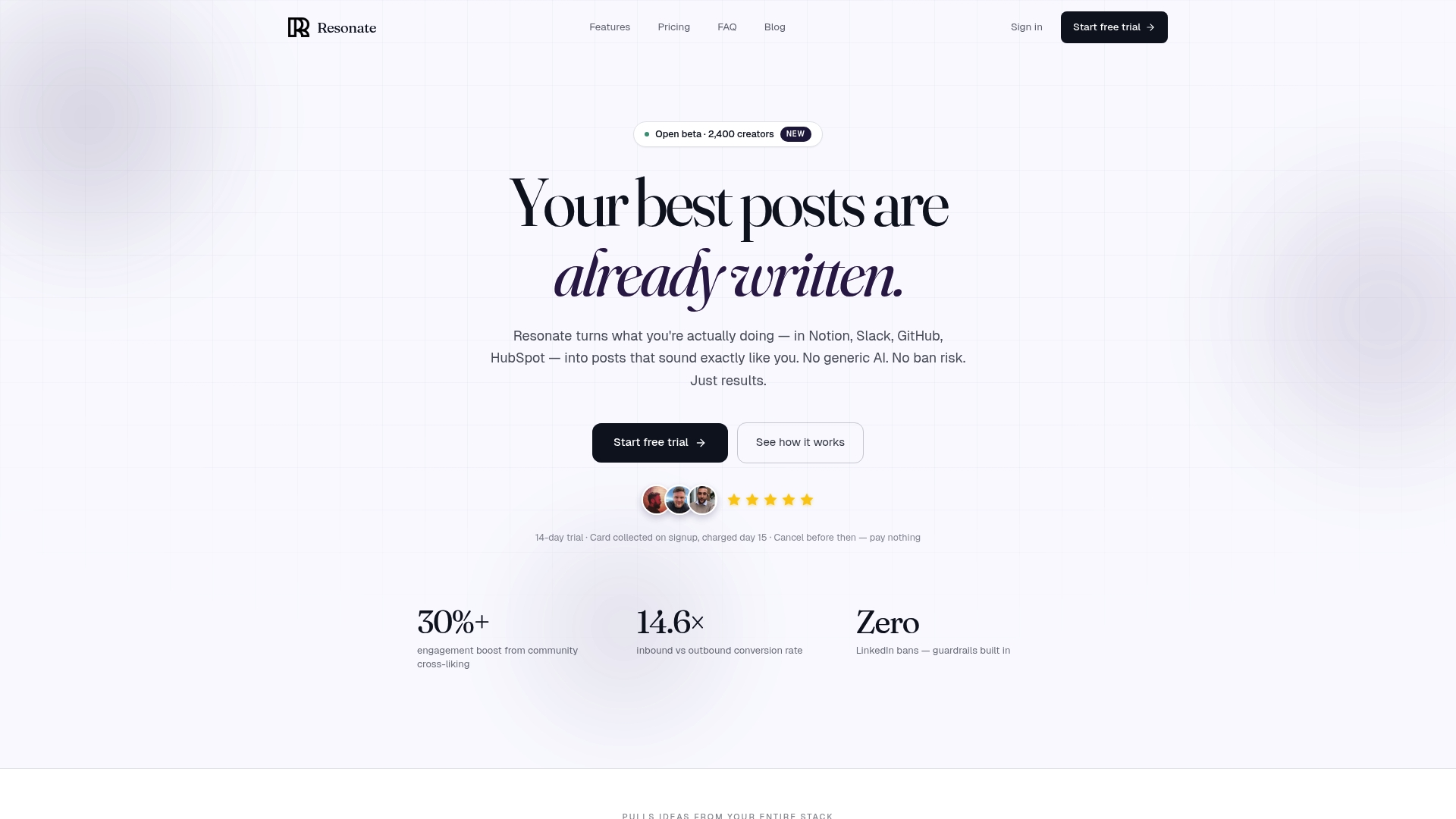
Resonate is designed to handle the entire LinkedIn content workflow in one place. The platform connects to your work tools like Notion, Slack, GitHub, and HubSpot to surface post ideas directly from your real activity, so your content always reflects genuine expertise. Its AI trains on your personal voice patterns, meaning every draft sounds like you, not a generic content bot. Built-in engagement guardrails protect your account while community boost features amplify new posts immediately after publication. From pillar ideation to performance analytics that sharpen over time, Resonate gives you a complete, safe, and personalized system for consistent LinkedIn growth. You can also explore animated LinkedIn content tools to further differentiate your posts visually within your pillar strategy.
Frequently asked questions
What are content pillars and why are they important for LinkedIn?
Content pillars are core recurring themes that provide consistency and clarity to your LinkedIn presence. They help you build authority by giving your audience a clear reason to follow and trust you over time.
How often should you post on LinkedIn for optimal engagement?
Posting three to five times per week, specifically Tuesday through Thursday, consistently delivers the best results. Following a structured posting cadence tied to your pillars keeps your presence steady without burning out.
Which LinkedIn post type gets the highest engagement rates?
PDF documents and carousels are the top performers, achieving a 7% engagement rate by impressions across 1.3 million posts analyzed, outperforming every other format on the platform.
How does AI help with content pillar management on LinkedIn?
AI tools can auto-tag pillar themes, track performance by topic, and generate batches of post ideas from your existing work data, significantly reducing manual planning time.
Should personal brands use different pillars than B2B brands?
Yes. Personal brands perform best with a blend of story, tips, and opinion, while B2B brands generate stronger results by focusing on authority and expertise signals combined with employee advocacy programs.
Recommended

Content Writer @ Resonate
Charlotte explores LinkedIn content, personal branding, AI writing, and founder-led marketing at Resonate. She believes the best content comes from real experience, not generic advice, and writes practical insights to help founders turn what they already know into content that people want to read.
Write LinkedIn content that sounds like you
with Resonate's AI Voice Engine