How to Get Your CEO Posting on LinkedIn (Without Writing Every Word)
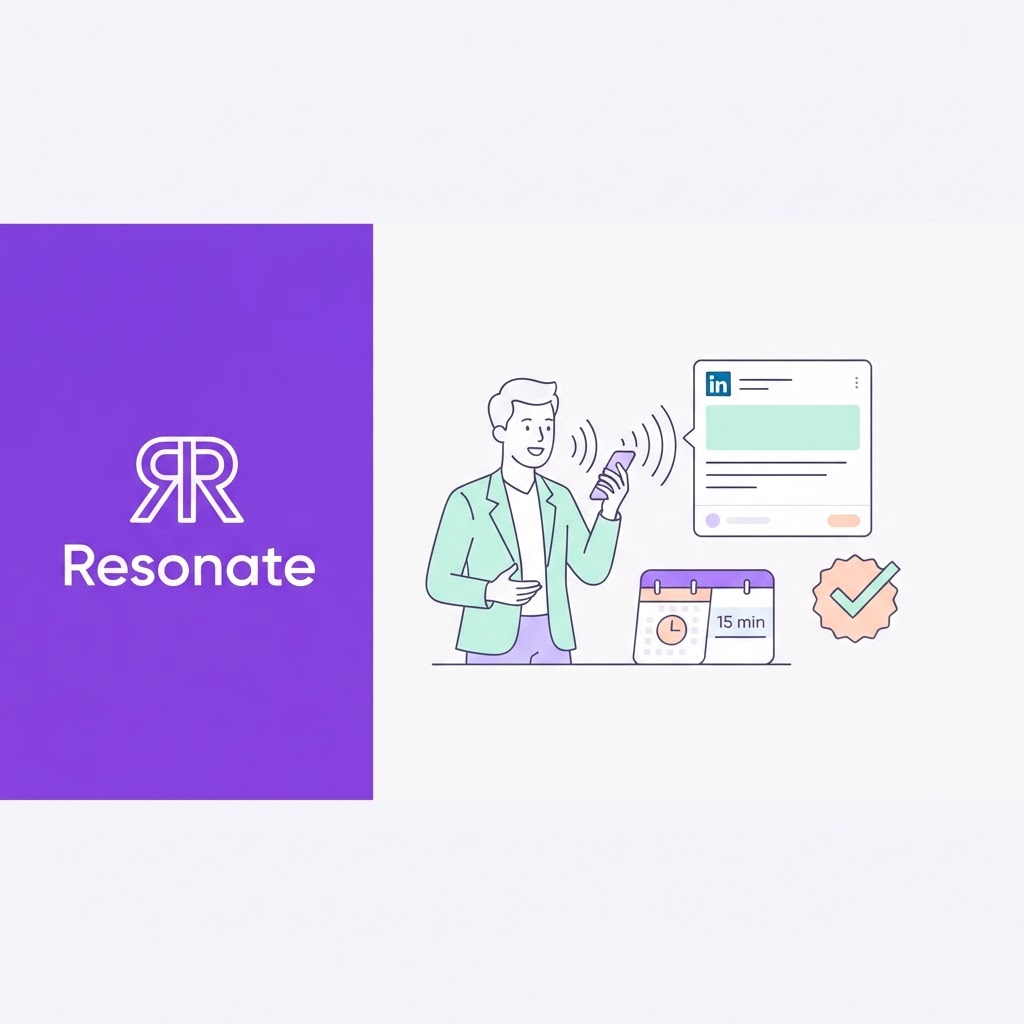
Your CEO knows more about your market than anyone in the company. They have the customer stories, the opinions, and the hard-won lessons. Yet their LinkedIn profile shows one post from eight months ago.
If you’re in marketing, you’ve probably tried to fix this. You sent a content calendar. You drafted a few posts. They sat in an inbox for three weeks and never went live.
This guide shows you how to get executives to post on LinkedIn consistently: how to win buy-in, how to build a CEO thought leadership program, and how to set up an executive content approval process that takes your CEO about 15 minutes a week, without them writing every word.
The short answer: To get executives posting on LinkedIn:
- Tie it to a business goal they care about.
- Ask for very little of their time.
- Capture their ideas through short interviews or voice notes instead of asking them to write.
- Have a ghostwriter or AI tool draft in their voice.
- Set up a simple approval process.
- Start with a 30-day pilot and show early results.
Key takeaways
- Executives don’t avoid LinkedIn because they don’t care: They avoid it because it feels like extra work with an unclear payoff.
- Make the ask small: 15 minutes a week to share ideas and approve drafts.
- Capture, don’t commission: Turn their meetings, notes, and opinions into posts so they never face a blank page.
- Remove friction from approvals: One approver, a clear deadline, and a mobile-friendly way to say yes.
- Prove it early: A 30-day pilot with a few visible wins builds more buy-in than any slide deck.
Why does executive LinkedIn content matter?
Before you can win buy-in, you need a business case. The strongest one comes from how B2B buyers actually decide. In the 2024 Edelman-LinkedIn B2B Thought Leadership study of 3,500 global B2B decision-makers:
- 73% say thought leadership is a more trustworthy basis for judging a company’s capabilities than its marketing materials
- 75% say a piece of thought leadership led them to research a product or service they weren’t already considering
- 86% would be likely to invite organisations that consistently produce thought leadership to an RFP
- 60% would pay a premium to work with an organisation that provides valuable thought leadership
Executives are well placed to deliver this kind of thought leadership. They have the context, the authority, and the opinions buyers want to hear. And people usually connect with people more than they connect with company pages.
For a founder or CEO, consistent LinkedIn content can lead to:
- Warmer sales conversations
- Easier hiring
- More inbound partnership and investor interest
- Credibility before the first meeting
Why don’t most executives post (and how do you answer each objection)?
| What your CEO says | What they really mean | How to respond |
|---|---|---|
| “I don’t have time.” | It feels like a big, open-ended commitment | “I need 15 minutes a week. I’ll handle the rest.” |
| “I don’t know what to post.” | They’re picturing a blank page | “You already have the ideas. I’ll pull them from your meetings and notes.” |
| “I’m not a writer.” | Writing feels slow and exposing | “You talk, we write. You just approve.” |
| “It feels self-promotional.” | They don’t want to brag | “We’ll share lessons and opinions, not announcements.” |
| “What if I say the wrong thing?” | Reputation or compliance risk | “Nothing goes live without your approval, and we’ll agree on topics to avoid.” |
| “Does it actually drive results?” | No clear ROI | “Let’s run a 30-day pilot and track specific outcomes.” |
Most objections come down to time, fear and unclear value. Your program needs an answer to all three.
How do you win executive LinkedIn buy-in?
1. Connect it to their priorities
Don’t pitch “personal branding”. Pitch the business outcome they already care about:
- Fundraising: “Investors will check your profile before the next round.”
- Sales: “Our buyers research leaders before they take a call.”
- Hiring: “Candidates look up the CEO before accepting an offer.”
- Category leadership: “Our competitors’ founders are shaping the conversation. We’re not in it.”
2. Show the gap with evidence
Use observable facts, not opinions.
- Instead of: “Our competitors are better on LinkedIn.”
- Say: “Over the last 30 days, [Competitor A]’s CEO posted 12 times and [Competitor B]’s posted 9 times. You posted once.”
3. Make the ask tiny and specific
“I need 15 minutes every Monday to talk through what’s on your mind, plus a few minutes to approve drafts on your phone.”
4. Propose a time-boxed pilot
“Let’s try 8 posts over 30 days. If it doesn’t deliver, we stop.”
5. Agree on what success looks like
Pick 2-3 outcomes before you start:
- Profile views
- Comments from target accounts
- Inbound messages
- Mentions in sales calls
A one-paragraph pitch you can adapt
“Our buyers research leadership before they engage. Edelman and LinkedIn found that 75% of B2B decision-makers have researched a product after reading a piece of thought leadership. Right now, [Competitor]’s CEO is showing up weekly and we’re not. I’d like to run a 30-day pilot: 8 posts drawn from things you’re already doing, drafted in your voice. I need 15 minutes a week from you, plus quick approvals on your phone. Nothing goes live without your OK. We’ll review results together on [date].”
How do you build a CEO thought leadership program?
A CEO thought leadership program is the system behind consistent executive content: goals, topics, voice, workflow, approvals, and measurement. Here are the seven parts:
1. Goals
One or two business goals, such as “become a known voice in [category] for Series A-B SaaS buyers” or “support next year’s fundraise”.
2. Content pillars (3-4 topics)
Topics your CEO can speak about with authority:
- The market: Trends and contrarian takes on your category
- Building the company: Lessons from scaling, hiring, and fundraising
- Customers: Problems you see and how you solve them
- Leadership: Decisions, mistakes, and values
3. Voice profile
Document how they actually speak:
- Phrases they use and phrases they’d never use
- Tone (direct? warm? funny?)
- Topics that are off-limits
Collect 20 of their existing posts, or about 5,000 words of their writing (memos, emails, talks), as reference. An AI assistant for content creation that learns voice from writing samples can turn this into a reusable profile. Resonate’s voice calibration works this way.
4. Idea sources
Where ideas come from, so nobody starts from a blank page:
- A weekly 15-minute interview
- Voice notes sent on the go
- Meeting notes, board updates, all-hands talks
- Slack threads, customer calls, product launches
5. Cadence
Start with 2 posts a week. Increase once the workflow runs smoothly. See how often you should post on LinkedIn for the data.
6. Roles
| Role | Who | Responsibility |
|---|---|---|
| Executive | CEO / founder | Shares ideas, approves posts, replies to key comments |
| Program owner | Content or marketing lead | Runs the calendar, interviews, drafting and reporting |
| Writer | In-house writer, ghostwriter, or AI-assisted workflow | Turns ideas into drafts in the executive’s voice |
| Gatekeeper (optional) | Chief of staff / EA | Protects calendar time and chases approvals |
| Reviewer (only if needed) | Legal / comms | Reviews posts on sensitive topics only |
7. Measurement
A monthly review of a few metrics tied to your goals (see below).
What does the 15-minute-a-week workflow look like?
This is how your CEO posts consistently without writing every word:
| Step | Who | Time (CEO) | What happens |
|---|---|---|---|
| Capture | CEO + program owner | 10 min | A short weekly call or voice note: “What did you learn, decide or argue about this week?” |
| Mine | Program owner | 0 | Pull more ideas from meeting notes, Slack, customer calls and product updates |
| Draft | Writer or AI tool | 0 | Turn 2-3 ideas into drafts in the CEO’s voice |
| Check | Program owner | 0 | Review the hook, specifics and voice. Remove anything off-brand. |
| Approve | CEO | 5 min | Approve, tweak or reject drafts on their phone |
| Publish | Program owner | 0 | Schedule at the agreed times |
| Engage | CEO | Optional | Reply to a few meaningful comments after posting |
Interview questions that reliably produce posts:
- “What’s one decision you made this week, and why?”
- “What’s a question a customer asked that surprised you?”
- “What do most people in our industry get wrong?”
- “What would you tell a founder one stage behind us?”
- “What’s something you changed your mind about recently?”
An AI-powered content creation platform can handle steps 2-4 for you. Resonate pulls ideas from tools like Notion, Slack, and HubSpot through AI writing, and checks every draft’s hook and voice through AI critique before anyone reviews it.
How should executive content approval work without stalling?
Approval is where most executive programs die. Drafts sit in inboxes, feedback comes in from five people, and posts go out two weeks late, or never. Fix it with clear rules.
Approval rules
- One approver: The executive approves their own posts. Don’t add layers unless the topic requires it.
- A clear deadline: For example, “Drafts arrive Monday and need approval by Wednesday 5pm.”
- A default: Agree what happens if there’s no response by the deadline: the post either moves to next week or goes out as approved.
- Mobile-friendly: Approvals should take seconds on a phone, not a login to a new tool.
- Three responses only: Approve, edit, or reject with one line of feedback.
Topic tiers
| Tier | Example topics | Who approves |
|---|---|---|
| Green | Lessons, opinions on the industry, hiring, culture | Executive only |
| Amber | Customer stories, company metrics, product roadmap | Executive + customer permission or a quick comms check |
| Red | Financial results, legal matters, M&A, anything regulated | Executive + legal or comms review |
Most posts should be green. If most of your drafts are amber or red, adjust your content pillars.
Pre-approval checklist (for the program owner)
- Sounds like the executive when read out loud
- One clear point
- Facts and numbers checked
- Customer permission obtained if anyone is named
- No off-limits topics
- Hook and close reviewed
For agencies and ghostwriters managing several executives: Resonate’s agency plan includes magic-link approvals, so executives approve from their phone without a login. See Resonate for agencies.
How do you measure your executive content program?
Track a small set of metrics monthly, tied to your goals:
| Goal | Metrics to track |
|---|---|
| Visibility | Impressions, follower growth, profile views |
| Engagement with the right people | Comments from target accounts, investors or candidates |
| Pipeline | Inbound DMs, meetings that mention the CEO’s posts, deals influenced |
| Hiring | Candidates who mention the CEO’s content |
| Consistency | Posts published vs planned, average approval time |
Tip: Ask your sales team to note when prospects mention the CEO’s posts. These stories often win more internal support than any chart. Tools with self-learning analytics can track the content metrics for you.
What does a 90-day rollout plan look like?
Days 1-30: Pilot
- Win buy-in with the pitch above
- Build the voice profile and content pillars
- Run weekly 15-minute interviews
- Publish 2 posts a week (8 in total)
- Track approval time and early engagement
Days 31-60: Refine
- Review the pilot results with the executive
- Double down on the topics that performed best
- Tighten the approval process
- Consider increasing to 3 posts a week
Days 61-90: Scale
- Add a second executive (CTO, CRO or Head of Product)
- Set up a shared idea pipeline across leaders
- Start monthly reporting to the leadership team
What are the common mistakes to avoid?
- Asking executives to write: They’ll delay. Ask them to talk instead.
- Too many reviewers: Every extra approver adds days.
- Generic corporate content: Posts that read like press releases won’t build personal credibility.
- Ignoring their voice: If the posts don’t sound like them, they won’t approve them, and readers won’t trust them.
- No early wins: Without visible results in the first month, interest fades.
- Only announcements: Product launches and awards are fine occasionally. Lessons and opinions build authority.
Which tools make executive content easier?
| Approach | Best for | Trade-off |
|---|---|---|
| In-house writer | Larger teams with budget | It takes time to learn each executive’s voice |
| Ghostwriter or agency | Executives who want it fully handled | Higher cost, and weekly calls are still needed |
| AI-assisted platform | Teams that want speed and consistency | Still needs human review and approval |
Resonate is an AI LinkedIn content generator built for this workflow:
- It pulls ideas from your executives’ real work.
- It drafts in each executive’s calibrated voice.
- It scores every draft before review.
Resonate’s options:
- For B2B marketing teams running several executives
- Done-for-you, with a named human editor and publishing handled
- MCP integration to run the workflow from Claude or ChatGPT
Comparing tools for executive programs? See Resonate vs Supergrow and Resonate vs Taplio.
How can you get your executives posting in 15 minutes a week?
Resonate turns your executives’ real work into LinkedIn posts in their voice, checks every draft before review, and makes approval quick. Your CEO shares ideas and approves. Resonate handles the rest.
Frequently asked questions
How do you get executives to post on LinkedIn?
Tie LinkedIn to a business goal they care about, ask for about 15 minutes a week and capture their ideas through short interviews or voice notes. Have a writer or AI tool draft posts in their voice, set up a one-step approval process and start with a 30-day pilot to show results.
How do you get executive LinkedIn buy-in?
Show the business case (buyers research leaders before they engage), point to observable gaps against competitors, make the time ask small and specific, and propose a time-boxed pilot with agreed success metrics.
What is a CEO thought leadership program?
A CEO thought leadership program is the system behind consistent executive content. It includes goals, content pillars, a voice profile, idea sources, a posting cadence, clear roles, an approval process and regular measurement.
How should executive content approval work?
Use one approver (the executive), a clear deadline and a mobile-friendly way to approve. Sort topics into tiers, so only sensitive posts (financials, legal, customer names) need extra review.
How much time does a CEO need to spend on LinkedIn?
With a good system, about 15 minutes a week: 10 minutes sharing ideas and 5 minutes approving drafts. Replying to a few comments after posting is optional but helps.
Should a ghostwriter write the CEO’s LinkedIn posts?
A ghostwriter, an in-house writer or an AI-assisted workflow can draft posts, as long as the ideas and opinions come from the executive and they approve every post. The content should reflect their real views and experience.
How many executives should post on LinkedIn?
Start with one, usually the CEO or founder. Once the workflow runs smoothly, add one more executive every month or quarter.

Content Writer @ Resonate
Charlotte explores LinkedIn content, personal branding, AI writing, and founder-led marketing at Resonate. She believes the best content comes from real experience, not generic advice, and writes practical insights to help founders turn what they already know into content that people want to read.
Write LinkedIn content that sounds like you
with Resonate's AI Voice Engine