Ways LinkedIn Grows Your Business Pipeline in 2026
Ways LinkedIn Grows Your Business Pipeline in 2026
 . If you want to try this yourself, spin up a draft with Resonate's LinkedIn content generator.
LinkedIn is the single most effective social platform for B2B pipeline generation, accounting for 80% of all B2B social media leads across every major channel. That number alone reframes how business professionals should think about their time online. The ways LinkedIn grows business pipeline are not accidental. They follow a repeatable framework built on thought leadership content, fast engagement, and disciplined follow-up. Conversion rates for LinkedIn-influenced deals reach 2.5 - 4%, compared to 0.8 - 1.2% for cold outreach. That gap is the business case for taking LinkedIn seriously as a pipeline channel.
1. Ways LinkedIn grows business pipeline through thought leadership content
Thought leadership is the highest-leverage activity on LinkedIn. 75% of decision-makers trust thought leadership content over traditional product sheets. That trust directly shortens sales cycles because buyers arrive pre-convinced of your credibility.
The four content types that drive pipeline each serve a different role:
- Problem-aware posts name a pain your buyer already feels. They attract cold audiences who recognize themselves in the problem.
- Proof posts share case studies, client results, or before-and-after outcomes. They convert warm readers into inbound leads.
- Mechanism posts explain your unique method or framework. They differentiate you from every generic competitor in your space.
- Perspective posts share a contrarian or counterintuitive opinion. They generate comments and signal intellectual authority.
Founder and individual profiles consistently outperform company pages in engagement and lead conversion. People-centric content strategies win because buyers trust people, not logos. Vendor credibility and founder reputation influence 34% of closed B2B SaaS deals, which means your personal brand is a direct revenue driver.
Pro Tip: Write at least one mechanism post per month. Explain your proprietary process in plain language. This single content type does more to establish authority than any amount of promotional copy.

2. What content formats and posting schedules drive the most pipeline?
Content format determines how far your posts travel and how many qualified buyers see them. Carousel posts built around data or frameworks generate significantly higher pipeline engagement than standard text posts. Video posts, text posts with data screenshots, and written case studies all show strong conversion when paired with a clear call to action.
Posting frequency matters as much as format. Profiles posting three or more times monthly see 27% higher profile engagement and 2.5x more inbound messages from decision-makers. Posting four to five times per week sits at the sweet spot for pipeline-relevant reach. Daily posting causes audience fatigue and diminishing returns.
| Format | Pipeline strength | Best use case |
|---|---|---|
| Carousel (data/framework) | Very high | Teaching a process or sharing research |
| Video (60 - 90 seconds) | High | Demonstrating expertise or sharing a story |
| Text with data screenshot | High | Sharing a surprising stat with your interpretation |
| Written case study | High | Proof of results for warm audiences |
| Plain text opinion | Medium | Generating comments and debate |
Engagement speed is the hidden variable most professionals ignore. Posts that receive meaningful comments within the first 60 minutes see 150 - 300% reach boosts compared to posts that sit quiet. The LinkedIn algorithm reads early engagement as a signal of quality and distributes the post to a wider audience.
Pro Tip: Schedule your posts for Tuesday through Thursday between 8:00 AM and 10:00 AM in your target audience’s time zone. Then stay online for 60 minutes after posting to reply to every comment. That window is where reach multiplies.
3. How to convert LinkedIn engagement into real sales conversations
Content creates attention. Pipeline comes from conversations. The top predictor of pipeline is not impressions or likes. It is the number of direct message conversations started within 48 hours of posting.
The follow-up sequence that works looks like this:
- Reply to every substantive comment within one to two hours. Ask a follow-up question. This extends the thread, signals responsiveness, and keeps your post visible.
- Send a personalized, non-pitch DM to commenters within 24 hours. Reference their specific comment. Do not pitch anything. Just continue the conversation. Non-pitch follow-up messages generate 5.4x more meetings than no follow-up at all.
- Use conditional message sequences based on how prospects reply. If they engage with your first DM, send a second message that offers a resource or asks a qualifying question. If they do not reply, move on. Chasing kills trust.
- Log every conversation in your CRM. Tag the originating post, the engagement type, and the pipeline stage the prospect enters. This data tells you which content types actually generate revenue.
Prospects who engage with your thought leadership content are 3.7x more likely to take a sales meeting than cold prospects. That multiplier is why the follow-up step is non-negotiable. The content warms the lead. The DM opens the door.
Pro Tip: Keep your first DM under four sentences. Mention their comment, add one relevant observation, and ask one open question. Longer messages feel like pitches even when they are not.
4. How to measure LinkedIn’s real impact on pipeline
Most professionals track vanity metrics: impressions, likes, follower count. None of those numbers appear in a revenue report. True pipeline measurement requires connecting LinkedIn engagement to CRM pipeline stages.
The tracking framework that works:
- Map engagement to CRM stages. Track which contacts move from Marketing Qualified Lead (MQL) to Sales Qualified Lead (SQL) to Opportunity to Closed-Won after engaging with your LinkedIn content.
- Use UTM parameters on every link you post. This connects LinkedIn traffic to specific landing pages and form fills in your analytics platform.
- Implement server-side tracking where possible. Browser-based tracking loses data due to ad blockers and cookie restrictions. Server-side tracking captures more of the actual conversion path.
- Calculate cost per pipeline dollar. Divide your total LinkedIn time investment (valued at your hourly rate) plus any paid spend by the pipeline value generated. Compare that number against your other channels.
Multi-touch attribution is the standard for accurate LinkedIn ROI measurement. A buyer who saw three of your posts, commented once, received a DM, and then booked a call represents a multi-touch LinkedIn conversion. Single-touch attribution misses most of that value. CRMs integrated with LinkedIn engagement data capture comments, profile visits, and content interactions, giving you a complete picture of how content influences pipeline.
5. How employee advocacy and content repurposing scale your pipeline reach
Individual content is powerful. Coordinated team content is exponentially more powerful. Employee networks are on average 12x larger than company pages, which means your colleagues’ posts reach audiences your company page will never touch.
The strategies that scale pipeline beyond your own profile:
- Activate employee advocacy. Give your team members pre-written post frameworks they can personalize. Authentic employee posts outperform polished corporate content because they carry individual credibility.
- Partner with LinkedIn creators and industry influencers. Companies using influencer and creator content programs see 30% revenue increases and 39% higher engagement. A single co-created post with a respected voice in your industry can generate more pipeline than a month of solo posting.
- Repurpose every LinkedIn post into at least two other formats. A strong LinkedIn post becomes an email newsletter section, a blog introduction, or a webinar talking point. This content repurposing approach multiplies your return on every piece of content you create without requiring additional research or ideation.
- Build authentic comment networks, not engagement pods. Engagement pods that use fake or reciprocal comments violate LinkedIn’s terms and produce zero pipeline. Real relationships with peers who genuinely engage with your content produce reach that converts.
The combination of employee advocacy, creator partnerships, and content repurposing turns a single content strategy into a multi-channel pipeline engine. Each element reinforces the others and compounds over time.
6. What LinkedIn outreach tactics complement your content strategy?
Content and outreach work best as a system, not as separate activities. A prospect who has seen your posts three times before receiving a connection request is far more receptive than a cold contact. This is the content-to-outreach flywheel that separates high-performing LinkedIn sellers from everyone else.
Connection request notes should reference something specific: a post they commented on, a shared connection, or a problem you know they face. Generic “I’d love to connect” messages get ignored. Specific, relevant notes get accepted.
After connecting, wait. Do not send a pitch within the first 48 hours. Share a relevant piece of content instead. Let the relationship develop before asking for anything. Buyers on LinkedIn are sophisticated. They recognize a pitch sequence immediately, and they disengage.
The most effective LinkedIn outreach is not outreach at all. It is a response to inbound interest generated by content. When a prospect comments on your post, visits your profile, or shares your content, they are signaling intent. Those signals are your highest-priority follow-up targets. Treat them accordingly.
Key takeaways
LinkedIn pipeline growth requires consistent content, fast engagement, and disciplined follow-up across every stage of the buyer journey.
| Point | Details |
|---|---|
| Thought leadership builds trust | 75% of decision-makers trust thought leadership over product sheets, shortening sales cycles. |
| Engagement speed multiplies reach | Responding within 60 minutes of posting drives 150 - 300% more content distribution. |
| Follow-up creates pipeline | Non-pitch DMs to commenters within 24 hours generate 5.4x more meetings than no follow-up. |
| Employee advocacy scales reach | Employee networks are 12x larger than company pages, extending your content’s reach significantly. |
| CRM tracking proves ROI | Connecting LinkedIn engagement to CRM pipeline stages is the only way to measure true business impact. |
What I’ve learned about LinkedIn pipeline growth after years of watching it work
The professionals who build real pipeline on LinkedIn share one trait: they treat it as a publishing business, not a social media hobby. They show up consistently, they write with a specific buyer in mind, and they follow up without fail.
The biggest mistake I see is treating content and outreach as separate strategies. They are one system. Content warms the audience. Outreach converts the warmest members of that audience. Skip either step and the whole thing stalls.
Patience is the part nobody wants to hear. Results on LinkedIn typically materialize over four to six months of consistent effort. The professionals who quit after six weeks never see the compounding effect that makes the channel so valuable. The ones who stay see inbound leads arrive without any outreach at all, because their content has done the relationship-building work in advance.
The other thing I’d push back on: viral posts are not the goal. Targeted posts with 1,000 - 3,000 impressions from the right audience generate more pipeline than posts with massive reach from the wrong one. Write for your buyer, not for the algorithm. The algorithm will follow.
- Tom
How Resonate helps you build LinkedIn pipeline without burning out
Maintaining a consistent LinkedIn presence while running a business is genuinely hard. Content creation takes time, follow-up takes discipline, and most professionals let one or both slip under pressure.
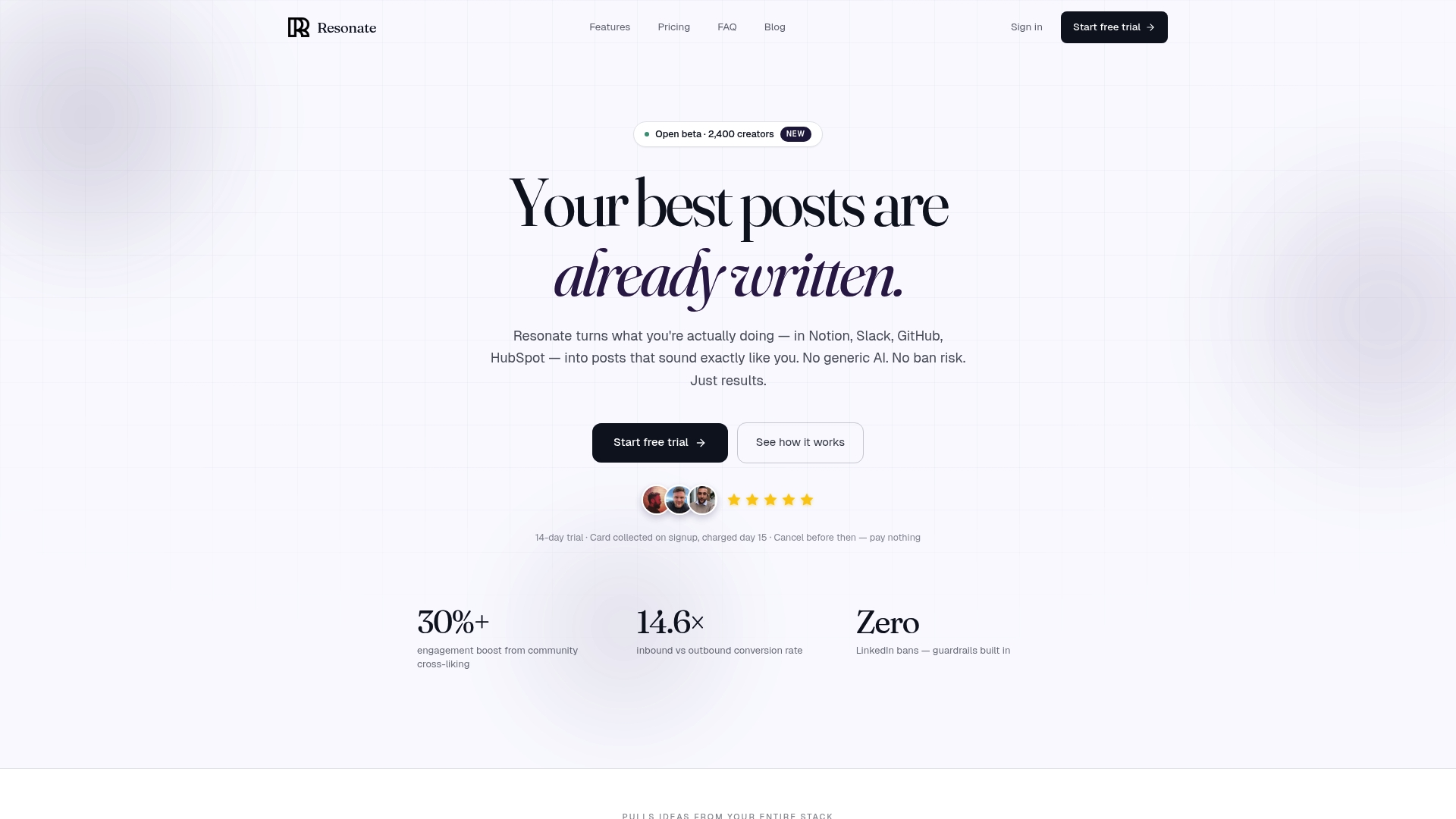
Resonate is built specifically for this problem. The platform connects to your existing work tools, including Notion, Slack, HubSpot, and GitHub, and pulls in real context from your actual work to generate post ideas that sound like you. It trains on your writing style so every post reflects your voice, not a generic AI template. Resonate’s community boost feature amplifies your posts immediately after publication, giving your content the early engagement signal that drives algorithmic reach. If you want to build LinkedIn pipeline without spending hours each week on content, Resonate handles the creation and scheduling while you focus on the conversations that close deals.
FAQ
How much of B2B social media leads does LinkedIn generate?
LinkedIn generates 80% of all B2B social media leads, outperforming Twitter, Facebook, and Instagram combined. Conversion rates for LinkedIn-influenced deals reach 2.5 - 4%, far above cold outreach benchmarks.
How often should I post on LinkedIn to grow my pipeline?
Posting four to five times per week produces the best pipeline results. Profiles posting three or more times monthly already see 27% higher engagement and 2.5x more inbound messages from decision-makers.
What is the fastest way to convert LinkedIn engagement into meetings?
Send a personalized, non-pitch direct message to every commenter within 24 hours of your post. This single tactic generates 5.4x more meetings than posting without any follow-up.
How do I measure LinkedIn’s impact on my sales pipeline?
Connect LinkedIn engagement data to your CRM and track contacts through MQL, SQL, Opportunity, and Closed-Won stages. Use UTM parameters on all content links and apply multi-touch attribution to capture the full conversion path.
Do company pages or personal profiles perform better for pipeline?
Personal profiles consistently outperform company pages for engagement and lead conversion. People-centric content strategies win because buyers trust individuals over corporate accounts, and employee networks are 12x larger than company pages on average.
Recommended

Content Writer @ Resonate
Charlotte explores LinkedIn content, personal branding, AI writing, and founder-led marketing at Resonate. She believes the best content comes from real experience, not generic advice, and writes practical insights to help founders turn what they already know into content that people want to read.
Write LinkedIn content that sounds like you
with Resonate's AI Voice Engine