Why "What Should I Post About?" Is the Wrong Question
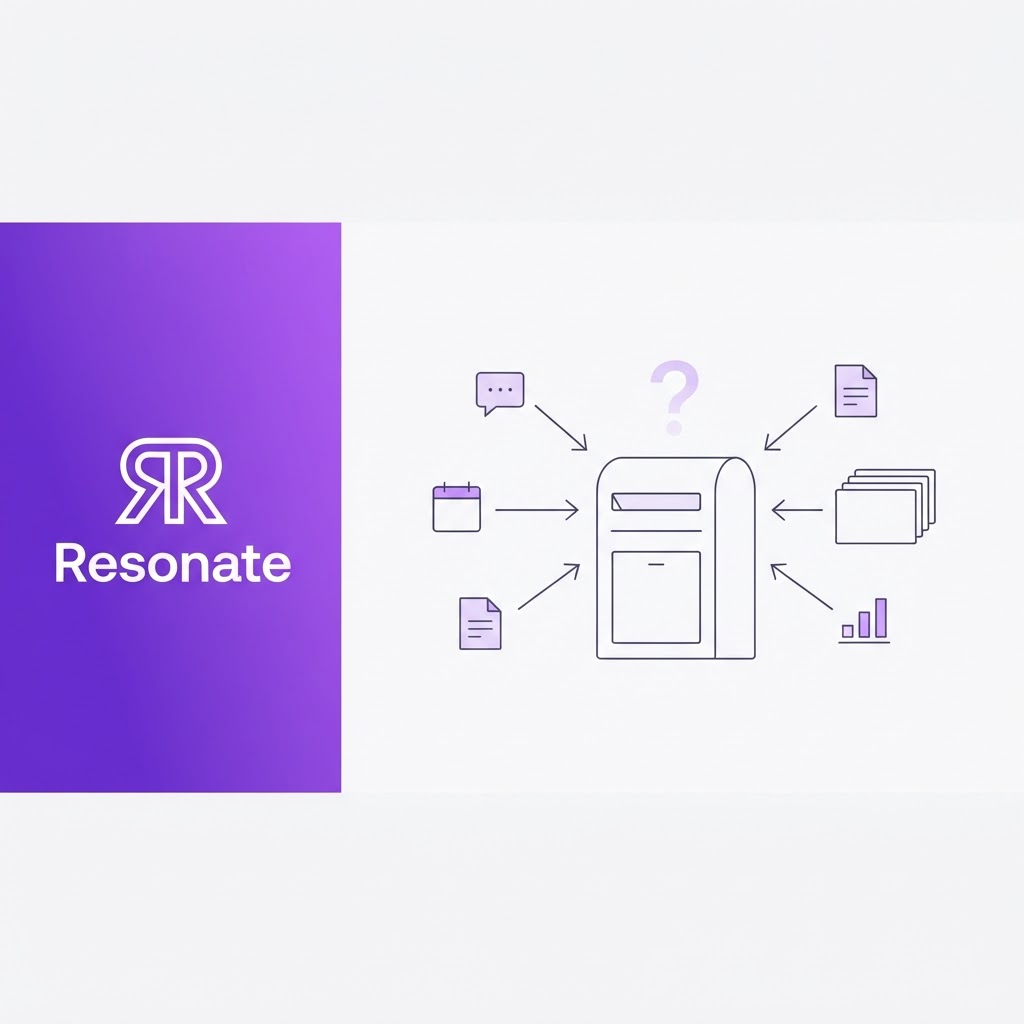
If you run a startup, you have probably opened LinkedIn, stared at the empty post box, and asked ChatGPT, "What should I post about?" You got ten generic topics, none of them sounded like you, and the tab closed. The fix is not a better prompt. It is a better question. The strongest LinkedIn content ideas from your work are already sitting in your customer calls, Slack threads, product updates, and board notes. You just haven't been looking there.
This guide shows why "what should I post about" keeps causing writer's block, what founders and marketing teams should ask instead, and a 10-minute weekly routine for turning the work you already do into posts your buyers will trust.
Quick answer: "What should I post about?" fails because it starts from a blank page and asks you to invent a topic. The better question is "What happened in my work this week that my ideal customer would learn from?" That turns LinkedIn from creative writing into capturing real moments: decisions, customer conversations, product lessons, metrics, and milestones. Those moments are specific, credible, and impossible for competitors to copy.
Why does "what should I post about" keep failing founders?
Founders and executives are not short on material. Every week they collect expertise, customer conversations, meetings, product updates, opinions, lessons, industry knowledge, and company milestones. What they lack is the time or a system to turn those inputs into consistent, high-quality LinkedIn content. The question "What should I post about?" makes that worse in three ways.
- It starts from zero. The question assumes you need new material, so you look outside your work for trending news, generic tips, or someone else's viral format. The post sounds like everyone else's because it came from the same place everyone else looks.
- It asks for a topic, not a moment. "Leadership" is a topic. "Why I stopped approving every hire once we passed 40 people" is a moment. Topics invite opinions anyone could write. Moments carry details only you have, and that is what makes a post worth reading.
- It turns posting into a second job. When content lives outside your work, it competes with your work for time, and your work always wins. That is why so many founders post three times after a funding announcement and then go quiet for two months. The problem was never discipline. The system asked them to manufacture ideas on top of a full calendar. (More on why "just be consistent" is bad advice.)
What is the better question to ask?
Ask: "What happened this week that's worth sharing?" Change the question and the job changes. You are no longer creating content. You are noticing it.
Every week of running a company produces raw material: a pricing debate, a churned customer, a hire that worked out, a feature that shipped late, and a sales call where a prospect said something surprising. Each is a post waiting to be written, because each contains a decision, a lesson, or a point of view.
This is not just a writing trick. It is how expertise turns into pipeline: business expertise, then LinkedIn visibility, then audience trust, then qualified demand. This is the content funnel hiding in your daily work. The research supports each step of that chain:
- Trust: 73% of B2B buyers say an organization's thought leadership is a more trustworthy basis for judging its capabilities than its marketing materials. Posts drawn from real work show how you think, which is exactly what buyers use to judge you. (2024 Edelman-LinkedIn B2B Thought Leadership Impact Report)
- Demand: 75% of B2B buyers say a piece of thought leadership led them to research a product or service they had not been considering. Visibility creates demand that did not exist before.
- Timing: 95% of business clients are not actively looking to buy at any given moment. Consistent posting keeps you visible until they are. (Same report, a survey of nearly 3,500 management-level professionals across seven markets.)
Posting from your real work is the most reliable way to keep that chain running, because the supply of material never runs out while the company is operating.
Where do LinkedIn content ideas from your work actually come from?
LinkedIn's own advice to executives points the same way. Its guide, 10 Post Ideas to Kickstart Executive Thought Leadership, recommends behind-the-scenes moments from team meetings, customer stories and lessons, and the reasoning behind company milestones. All of these come from work you are already doing.
| Where it lives | What to look for | Post angle it creates |
|---|---|---|
| Customer calls and CRM notes (HubSpot, Salesforce) | Repeated objections, surprising questions | "The question every prospect asked us this quarter" |
| Slack threads | Internal debates, decisions, small wins | "We argued about this for a week. Here's what we decided and why" |
| Product updates (GitHub, Linear) | What shipped, what got cut, what broke | "Why we cut our most requested feature" |
| Meeting notes and docs (Notion, Google Docs) | Strategy shifts, frameworks you already use | "The one-page framework we use to prioritize" |
| Fundraising and hiring | Funding milestones, new roles, onboarding lessons | "What we look for in our first content marketer" |
| Metrics and dashboards | Numbers that moved, experiments that failed | "We tested this for 30 days. It did not work." |
| Your own mistakes | Things you would do differently | "3 things I got wrong in our first year" |
You don't need all seven. Pick the two sources where most of your week happens and watch those closely. For more on mining these tools, see how Notion, Slack, and GitHub become LinkedIn content and how GitHub and Slack data fuel post ideas.
Why is LinkedIn writer's block a sourcing problem, not a creativity problem?
Most advice about LinkedIn writer's block treats it like a creative slump: try a new template, borrow a hook, post a poll. Those tactics help you finish a post, but they don't fix the real issue, which is that you have nothing specific to say.
Writer's block usually shows up for one of three reasons:
- No input: You aren't capturing moments when they happen, so by Friday you can't remember what was interesting on Tuesday.
- Too high a bar: You are waiting for a big insight instead of sharing a small, true one.
- Wrong voice: You are trying to sound like a "LinkedIn person" instead of sounding like yourself on a good customer call.
Fix the input, and the other two get easier. When you have five real moments to choose from, picking one is simple. Writing about something that actually happened also tends to sound like you by default, which is why voice calibration works best when the raw material is your own.
How do you stop running out of things to post? A 10-minute weekly routine
Step 1: Capture during the week (1 minute a day)
Keep one running note. Whenever something makes you think "That's interesting" or "I wish I'd known that earlier", add one line.
Step 2: Scan your sources (3 minutes)
On Friday, skim the week's Slack, calendar, and call notes. Add anything you missed.
Step 3: Run three filter questions (2 minutes)
For each moment, ask: Did I make a decision? Did I learn something? Would my ideal customer care? Keep anything with at least two yeses.
Step 4: Pick one angle per idea (2 minutes)
Decide whether it is a lesson, a contrarian take, a behind-the-scenes story, or a before-and-after.
Step 5: Schedule two or three posts (2 minutes)
Draft or brief the strongest ideas and put them on the calendar. Everything else stays in the note for next week.
Two to three posts a week matches the cadence LinkedIn's executive guide recommends, and it is sustainable when the ideas come from your work. Run this for a month, and the problem flips. Instead of running out of things to post, you will have more ideas than publishing slots.
What does turning a work moment into a post look like?
A Series A founder posts this in her team's Slack:
"Third demo this week where the prospect asked if we integrate with HubSpot before asking what we actually do. Should we lead with integrations on the site?"
Here is the LinkedIn post hiding inside it:
- Hook: Three prospects this week asked about our HubSpot integration before asking what our product does.
- Insight: Buyers aren't evaluating your product in isolation. They are evaluating how much work it adds to the stack they already run.
- What we're changing: Integrations move from slide nine of our deck to slide two.
- Question for the audience: Founders, what do your buyers ask about first?
No brainstorming required. The idea came from a message she had already written. For a step-by-step version of this exact flow, see how Resonate turns Slack threads into LinkedIn posts.
What does this shift mean for your role?
- Founders and CEOs: Your expertise is already visible inside the company. The gap is distribution. Posting from real work builds authority without hours of writing, and it is how founder visibility turns into inbound and warmer sales calls. Here is why CEO personal branding is an underused sales channel.
- CMOs and growth and content marketers: You can't scale executive content by interviewing the CEO every week. Repurposing company knowledge that already lives in Slack, Notion, and the CRM keeps brand voice consistent and cuts production time.
- Executive assistants and chiefs of staff: You already manage the founder's meetings, notes, and priorities. A work-to-content system turns that activity into a consistent publishing schedule, so the founder's LinkedIn stops depending on a free evening. If you'd rather hand off the whole process, Resonate's done-for-you LinkedIn service runs it with a named editor while the founder approves.
- Agencies and ghostwriters: The hardest part of client LinkedIn is getting raw material out of busy founders. A system that reads client work directly removes that bottleneck, so you can add LinkedIn content without adding headcount. See how Resonate supports agencies managing every client's voice.
- Investors and VC platform teams: Portfolio founders need visibility to hire, sell, and raise, and most don't have a content system. Sharing a work-to-content playbook across the portfolio scales founder-led marketing without asking any founder to become a full-time writer. Firms can introduce Resonate to portfolio companies through the Resonate partner program.
How does Resonate turn your real work into LinkedIn posts?
Resonate is an AI LinkedIn ghostwriter powered by your real work and calibrated to your voice. Instead of asking what you want to post about, it starts from the tools where your work already lives, including Notion, Slack, GitHub, and HubSpot.
- Real work: Resonate connects to your tools and reads launches, wins, decisions, and customer insights.
- Ideas: Its content ideas engine turns that activity into post-ready ideas, each with an engagement estimate.
- Voice calibration: A voice model trained on your past posts and writing samples captures your tone, phrasing, and rhythm.
- AI draft: Each idea becomes a full draft written in your calibrated voice.
- AI critique: Three AI critique agents (Hook, Voice, and Virality) review every draft before you see it.
- Human approval: Nothing goes live until you approve it, so you stay in control of every word.
- Schedule: Approved posts are queued for the best time to publish.
- Publish: Posts go out on schedule, without browser extensions or scraping.
- Learn from performance: Self-learning analytics feed real engagement back into your voice model, so each post gets sharper.
The result is ghostwriter-quality LinkedIn in about 10 minutes a week, without the weekly calls a human ghostwriter needs. Compare plans on the Resonate pricing page, or read more about the AI LinkedIn content generator.
Stop asking what to post about. Start your free 14-day Resonate trial from the pricing page and see what your own work has been trying to tell your audience.
Final takeaway
"What should I post about?" is the wrong question because it sends you searching for content everywhere except the one place you have an unfair advantage: your own work. Ask what happened this week that your customer would learn from, capture it when it happens, and LinkedIn stops being a blank page. It becomes a public record of how you think, and that is what turns expertise into trust and trust into qualified demand.
Frequently asked questions
How do I find LinkedIn content ideas from my work?
Look at the places your week already happens: customer calls, Slack threads, product updates, meeting notes, and metrics. Any moment where you made a decision, learned something, or changed your mind is a post idea. Capture these moments in one running note and review it once a week.
How do I get over LinkedIn writer's block?
Treat it as a sourcing problem, not a creativity problem. Writer's block usually means you have nothing specific to say. If you capture real work moments during the week, you sit down to choose between ideas instead of inventing one from scratch.
What should I do when I'm running out of things to post on LinkedIn?
Stop looking outside your work for topics. Review the last two weeks of calls, decisions, and results, and ask what your ideal customer would learn from each one. Small, specific moments tend to land better than broad opinions because they carry details only you have.
How often should founders post on LinkedIn?
LinkedIn's own executive guide recommends two to three posts a week, published consistently. That cadence is sustainable for most founders when each post comes from a real work moment rather than a forced topic.
Can AI turn my work into LinkedIn posts without sounding generic?
Yes, if the AI starts from your real work and is calibrated on your own writing. Generic AI posts sound generic because they start from a generic prompt. Resonate pulls ideas from your own tools, drafts in your calibrated voice, and leaves final approval with you.
For a cost and quality breakdown, see human ghostwriter vs. AI ghostwriter.

Content Writer @ Resonate
Charlotte explores LinkedIn content, personal branding, AI writing, and founder-led marketing at Resonate. She believes the best content comes from real experience, not generic advice, and writes practical insights to help founders turn what they already know into content that people want to read.
Write LinkedIn content that sounds like you
with Resonate's AI Voice Engine