AI Ghostwriting Tools for LinkedIn: How to Choose the Right One in 2026

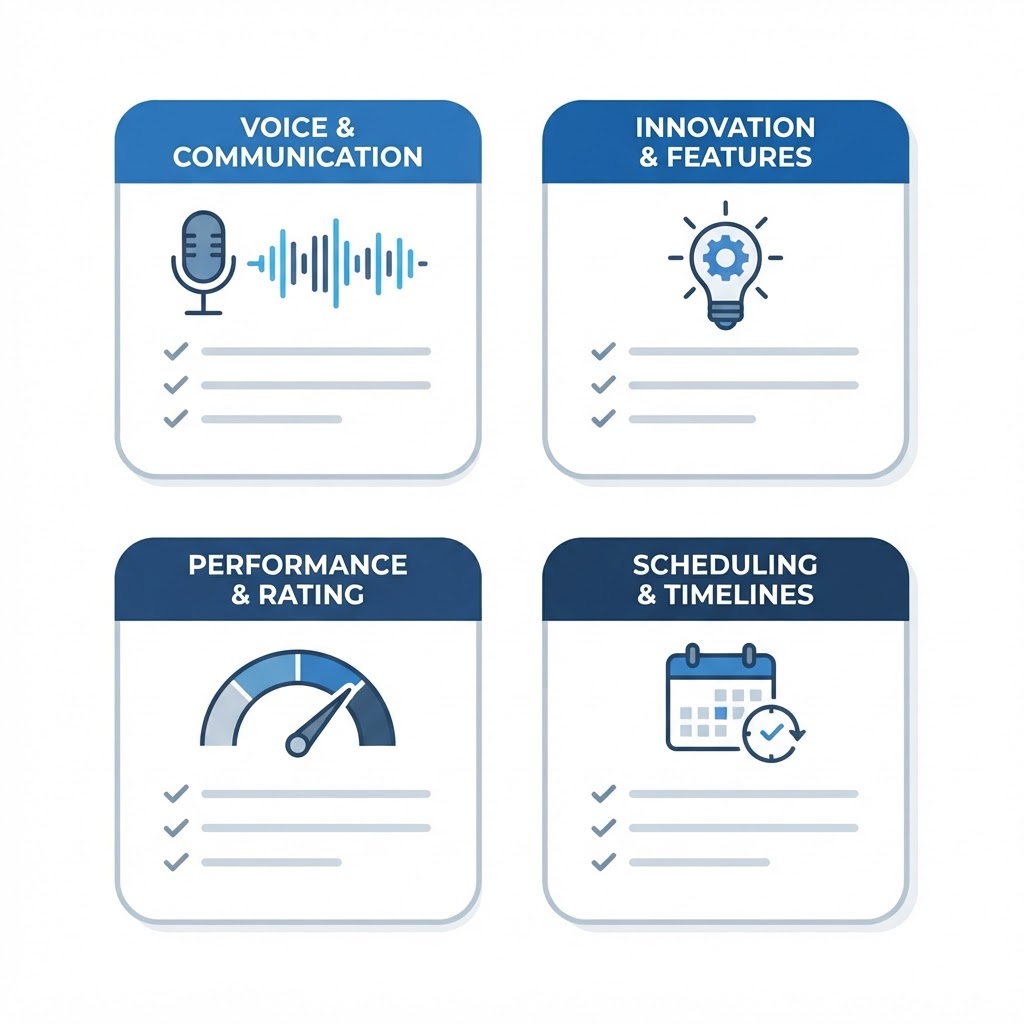
Choosing an AI ghostwriting tool for LinkedIn is not simply about finding software that can generate LinkedIn posts. A useful AI LinkedIn ghostwriting tool should solve four separate problems:
- Voice accuracy - Does the content sound like the person publishing it?
- Idea sourcing - Does it generate ideas from real work rather than generic prompts?
- Pre-publish critique - Can it identify weaknesses before the post is published?
- Scheduling and publishing - Can it publish content through a safe and reliable workflow?
The best tool is therefore not necessarily the one with the most AI features. It is the one that reduces the most work while preserving the founder's voice, expertise, context, and control. A fuller comparison of where each type of tool sits on that spectrum is covered in the 2026 LinkedIn ghostwriter AI strategy guide.
What is an AI ghostwriting tool for LinkedIn?
An AI ghostwriting tool for LinkedIn is software that uses artificial intelligence to help create LinkedIn content on behalf of a person while attempting to preserve that person's writing style and professional perspective. Basic AI writing tools primarily generate drafts from prompts. More advanced AI ghostwriting systems can support a broader workflow:
Idea sourcing → Drafting → Voice matching → Content critique → Scheduling → Publishing → Performance analysis
This distinction matters because writing the words is only one part of LinkedIn content creation. A founder also needs to:
- Decide what to write about
- Find useful source material
- Explain an experience
- Develop an opinion
- Turn the idea into a post
- Make sure the post sounds authentic
- Review its quality
- Publish it
- Measure the result
A tool that only generates text does not necessarily replace a complete ghostwriting workflow, which is why content automation is meant to save founders time rather than just relocate it.

AI ghostwriting vs human LinkedIn ghostwriting
A human LinkedIn ghostwriter traditionally performs several jobs:
- Extracting ideas from the founder
- Identifying useful stories
- Developing content angles
- Writing posts
- Matching the founder's voice
- Editing content
- Managing publishing
The source content states that human LinkedIn ghostwriting commonly costs approximately 1,500 to 2,500 per month and may involve a recurring weekly call. That cost range is a source-provided claim and should be independently verified before publication.
AI ghostwriting tools attempt to automate some or most of this workflow at a lower recurring cost. A side-by-side breakdown of current pricing across tools is in the pricing overview.
The important comparison is therefore not simply AI vs Human. It is: which parts of the ghostwriting process does the tool actually replace?
What should you look for in an AI LinkedIn ghostwriting tool?
The four most important evaluation criteria are:
| Criterion | Key question | Why it matters |
|---|---|---|
| Voice accuracy | Does it actually sound like you? | Protects authenticity and trust |
| Idea sourcing | Where do its ideas come from? | Prevents generic content |
| Pre-publish scoring | Can it identify weaknesses before publishing? | Reduces publishing guesswork |
| Scheduling and publishing | How does it connect to LinkedIn? | Creates a complete workflow while reducing account risk |
A tool that performs only one or two of these functions may be useful as an AI writing assistant, but it may not provide the complete workflow expected from an AI ghostwriter. The full feature set is broken out on Resonate's features.
1. Voice accuracy: does the AI actually sound like you?
Voice accuracy is one of the most important criteria when evaluating an AI ghostwriting tool. A LinkedIn personal brand depends on recognizability. If every post sounds like generic AI-generated content, the tool can undermine the purpose of personal branding - the same authenticity risk covered in how to write LinkedIn posts without losing authenticity.
Generic AI writing often relies on:
- Predictable structures
- Generic introductions
- Repetitive phrasing
- List-heavy formats
- Broad business advice
- Artificially confident language
A stronger AI ghostwriting system should learn from the person's actual writing.
What should an AI voice model analyze?
A useful voice model can analyze patterns such as sentence rhythm, vocabulary, sentence length, opening patterns, closing patterns, tone, formatting, preferred expressions, content structure, and communication style.
The important distinction is tone setting is not voice modeling. A setting such as "professional," "friendly," or "confident" provides a broad stylistic instruction. Voice modeling attempts to reproduce the specific characteristics of an individual writer.
For example, "Write this professionally." is not equivalent to "Write this using the vocabulary, sentence rhythm, structure, and phrasing patterns found in my previous LinkedIn posts."
How does Resonate approach voice calibration?
Resonate's Voice Learning feature is designed to create a model of an individual's writing style using their existing writing and LinkedIn content. According to Resonate, its system uses this information to evaluate generated content against the user's established voice. Learn more about Resonate's AI voice calibration.
This approach is particularly relevant for founders because the objective of LinkedIn personal branding is not merely to publish grammatically correct content. The objective is to publish content that sounds recognizably like the founder.
How to test voice accuracy during an AI ghostwriting tool trial
Do not evaluate voice matching using a generic demo prompt. Instead:
- Give the tool several examples of your actual LinkedIn posts.
- Provide it with a real experience or business event.
- Ask it to create a new post.
- Compare the generated post with your existing writing.
- Look for differences in vocabulary, sentence rhythm, structure, and tone.
- Edit the draft and determine how much manual rewriting is required.
The key question is: could someone who knows your writing identify this as your post? If the answer is no, the tool is probably not solving the voice problem effectively.
2. Idea sourcing: where does the AI get its content ideas?
Idea sourcing is one of the most important differences between a generic AI writing tool and a true AI ghostwriting workflow. A generic AI tool might generate "5 productivity tips every founder should know." The problem is that thousands of other users can generate essentially the same idea.
A stronger system should identify ideas from the founder's real work, the same principle behind surfacing post ideas from client work. For example:
- GitHub decision → Technical insight → LinkedIn post
- Customer conversation → Unexpected objection → LinkedIn post
- Slack discussion → Business disagreement → LinkedIn post
These ideas are more difficult for competitors to replicate because they originate from the founder's actual experience.
Why real-work sourcing matters
The most valuable personal-brand content often comes from experiences that only the founder has access to. Potential sources include customer conversations, product decisions, internal discussions, sales conversations, business experiments, project outcomes, customer objections, unexpected results, product launches, and technical decisions.
The founder already generates this information. The challenge is turning it into content. This is the content extraction problem.
What integrations should an AI ghostwriting tool have?
When evaluating an AI LinkedIn ghostwriter, examine where it can obtain source material. Useful integrations may include Notion, Slack, GitHub, HubSpot, Salesforce, CRM systems, project-management tools, and other business knowledge systems.
According to the source content, Resonate supports 15+ integrations and uses information from connected work tools to surface potential LinkedIn content ideas, including a dedicated HubSpot integration for content teams and a documented approach to integrating CRM data with LinkedIn strategy. This product claim should be checked against Resonate's current integration documentation before publication. See Resonate's LinkedIn content-generation workflow.
The competitor test for AI content ideas
A simple test can help determine whether an AI ghostwriting tool is sourcing useful ideas. Ask: could another user of this tool generate the same idea? If the answer is yes, the idea is probably too generic.
For example, generic: "5 lessons every founder should know about hiring." Specific: "Our seventh engineering hire changed how we structure technical interviews because one assumption in our first six interviews was wrong."
The second idea contains information derived from a specific experience. That is what makes it useful for personal branding, and it's the same standard that makes case study posts drive conversions that last longer than generic advice content.
3. Pre-publish scoring: can the tool evaluate the post before it goes live?
A sophisticated AI ghostwriting workflow should not end when the draft is generated. The next question is: is this actually a strong LinkedIn post? This is where pre-publish scoring and AI critique become useful, and why the role of content hooks in LinkedIn posts that win is worth understanding before a draft ever reaches this stage.
A content critique system can evaluate areas such as hook strength, voice consistency, structure, specificity, readability, potential engagement, and overall content quality. The purpose is not to guarantee that a post will go viral. No AI system can reliably guarantee the performance of an individual LinkedIn post. Instead, pre-publish analysis can help identify obvious weaknesses before the audience sees them.
Why pre-publish critique matters
Without pre-publish critique: Idea → Draft → Publish → Discover the problem. With pre-publish critique: Idea → Draft → Critique → Improve → Publish. The second workflow creates an opportunity to fix problems before they become public.
For example, an AI critique system might identify a weak opening, too much generic advice, an unclear central argument, inconsistent voice, or a conclusion that does not reinforce the main point.
How does Resonate critique LinkedIn content?
Resonate's AI Critique feature uses multiple specialist agents to evaluate content. The source content identifies three agents: the Hook Agent, the Voice Agent, and the Virality Agent. These agents independently evaluate different aspects of a draft and provide inline suggestions. A closer look at how this differs from a one-shot AI grade is in how AI critique improves content quality.
The important value is not the numerical score itself. The value is identifying weaknesses before publication.
Why AI scores should not be treated as guarantees
An engagement score is a prediction, not a promise. LinkedIn post performance can depend on factors outside the content itself, including audience, timing, topic, distribution, existing network, current conversations, competition for attention, and external events. One of the less obvious variables is dwell time, which a pre-publish score can estimate but never fully control. Therefore, the best use of AI scoring is as a decision-support mechanism, not a guarantee of virality.
4. Scheduling and publishing: how does the tool connect to LinkedIn?
Scheduling is the final component of a complete AI ghostwriting workflow. A useful tool should allow users to queue approved posts, manage publishing times, review scheduled content, maintain control over publication, and reduce the need to manually publish every post. Resonate's scheduler is built around this queue-and-approve model rather than one-click auto-posting. However, convenience should not be the only consideration. Authentication and publishing architecture matter.
What should you check before connecting an AI tool to LinkedIn?
Before connecting an AI ghostwriting tool to a LinkedIn account, investigate how the tool authenticates, whether it uses official APIs, what permissions it requests, whether it requires browser extensions, whether it requires cookies or session credentials, whether it relies on scraping, what publishing limits it uses, and whether the user can review content before publication.
The source content specifically advises avoiding tools that rely on Chrome extensions, cookie-based authentication, or scraping and recommends API-level connections where available. This is also why posting limits matter for LinkedIn creators and why a properly built tool explains what safe posting automation actually means rather than leaving it as a footnote. See also Resonate's security practices. Any statement about LinkedIn enforcement or account restrictions should be supported by current LinkedIn documentation before publication.
Why publishing safety matters
An AI ghostwriter can produce excellent content and still be a poor choice if its publishing mechanism creates unnecessary account risk. Therefore, evaluate two separate things: content quality and account safety. A good AI ghostwriting system should optimize both.
AI ghostwriting tool vs human LinkedIn ghostwriter
AI and human ghostwriters have different strengths.
| Factor | AI ghostwriting tool | Human ghostwriter |
|---|---|---|
| Cost | Generally lower recurring cost | Generally higher |
| Speed | Immediate or near-immediate | Dependent on workflow |
| Idea extraction | Can automate from connected sources | Usually requires interviews/calls |
| Writing | Automated | Human |
| Voice matching | AI-based | Human interpretation |
| Judgment | Limited by system | Human judgment |
| Scaling | High | Limited by available time |
| Weekly calls | Potentially unnecessary | Often part of the workflow |
| Founder approval | Usually possible | Usually possible |
| Content strategy | Tool-dependent | Human strategist can provide it |
When should you hire a human ghostwriter?
A human ghostwriter can still be the better option when a founder wants high-touch collaboration, strategic content consulting, human editorial judgment, interview-based storytelling, someone to manage the entire content process, or a dedicated person responsible for the content operation. The advantage is not simply writing ability. It is judgment, context, and collaboration.
When should you use an AI ghostwriting tool?
An AI ghostwriting tool may be more appropriate when the primary problem is finding content ideas, reducing writing time, maintaining consistency, preserving writing voice, creating drafts quickly, reviewing content before publishing, or managing a repeatable publishing workflow. The key question is: what part of the ghostwriting process is currently consuming the most time? Choose the technology based on that bottleneck.
AI ghostwriting tool vs DIY LinkedIn content
DIY content creation has one major advantage: complete control. But it also requires the founder to perform every step: Idea → Research → Draft → Edit → Review → Publish → Measure.
An AI-assisted workflow can reduce the repetitive parts: Work → Idea → Draft → Voice Check → Critique → Approval → Publish. The founder still owns the final decision. This is important because personal branding requires authenticity and professional judgment.
What is the best AI ghostwriting tool for LinkedIn in 2026?
There is no universally best AI ghostwriting tool for every LinkedIn user. The best tool depends on the user's needs, writing style, workflow, integrations, publishing requirements, and budget. Direct comparisons against specific competitors, including Resonate vs Taplio, Resonate vs Supergrow, and Resonate vs Postwise can help narrow this down once you know which criterion matters most to you.
However, a useful evaluation framework should include four core criteria: voice accuracy, real-work idea sourcing, pre-publish critique, and safe scheduling and publishing. A tool that performs exceptionally well in only one category may still leave major parts of the ghostwriting process to the user.
How should you evaluate an AI LinkedIn ghostwriter?
Use this seven-step evaluation process.
- Test your own writing. Upload or provide real examples of your LinkedIn posts. Do not rely on the vendor's demonstration account.
- Give it a real experience. Provide a genuine customer story, product decision, business lesson, or work event.
- Evaluate the idea. Ask whether the resulting idea is specific to you.
- Evaluate the voice. Compare the generated content against your actual writing.
- Evaluate the critique. Check whether the tool can identify weaknesses in the post.
- Evaluate publishing. Understand exactly how the tool connects to and publishes on LinkedIn.
- Calculate editing time. Measure how long you spend correcting the AI-generated post.
This final metric is particularly important. If an AI-generated post takes 40 minutes of manual rewriting, the tool may not actually be saving meaningful time - the same efficiency test used in how content automation saves founder time.
AI ghostwriting tool evaluation scorecard
| Evaluation area | What to check | Strong signal |
|---|---|---|
| Voice | Does it learn from actual writing? | Draft requires minimal voice editing |
| Ideas | Does it use real work? | Ideas are specific to the user |
| Integrations | Can it access relevant work sources? | Multiple useful business integrations |
| Drafting | Does it create complete posts? | Minimal manual rewriting |
| Critique | Does it identify weaknesses? | Actionable pre-publish suggestions |
| Scheduling | Can approved content be queued? | Reliable publishing workflow |
| Authentication | How does it connect to LinkedIn? | Transparent, appropriate authentication |
| Control | Can the founder approve content? | Nothing publishes without approval |
| Analytics | Can performance be measured? | Clear content-performance reporting |
What makes an AI ghostwriter different from a generic AI writing tool?
The key distinction is context. A generic AI writing tool usually starts with: Prompt → Generated Text. An AI ghostwriter should ideally support: Personal Data → Content Insight → Idea → Voice-Matched Draft → Critique → Approval → Publishing.
This difference explains why simply asking a general-purpose AI model to "write a LinkedIn post" does not necessarily produce effective ghostwriting. The model needs sufficient information about who the writer is, what they know, what they have experienced, what they believe, how they communicate, and who they are trying to reach.
Why real work is the best source of LinkedIn content
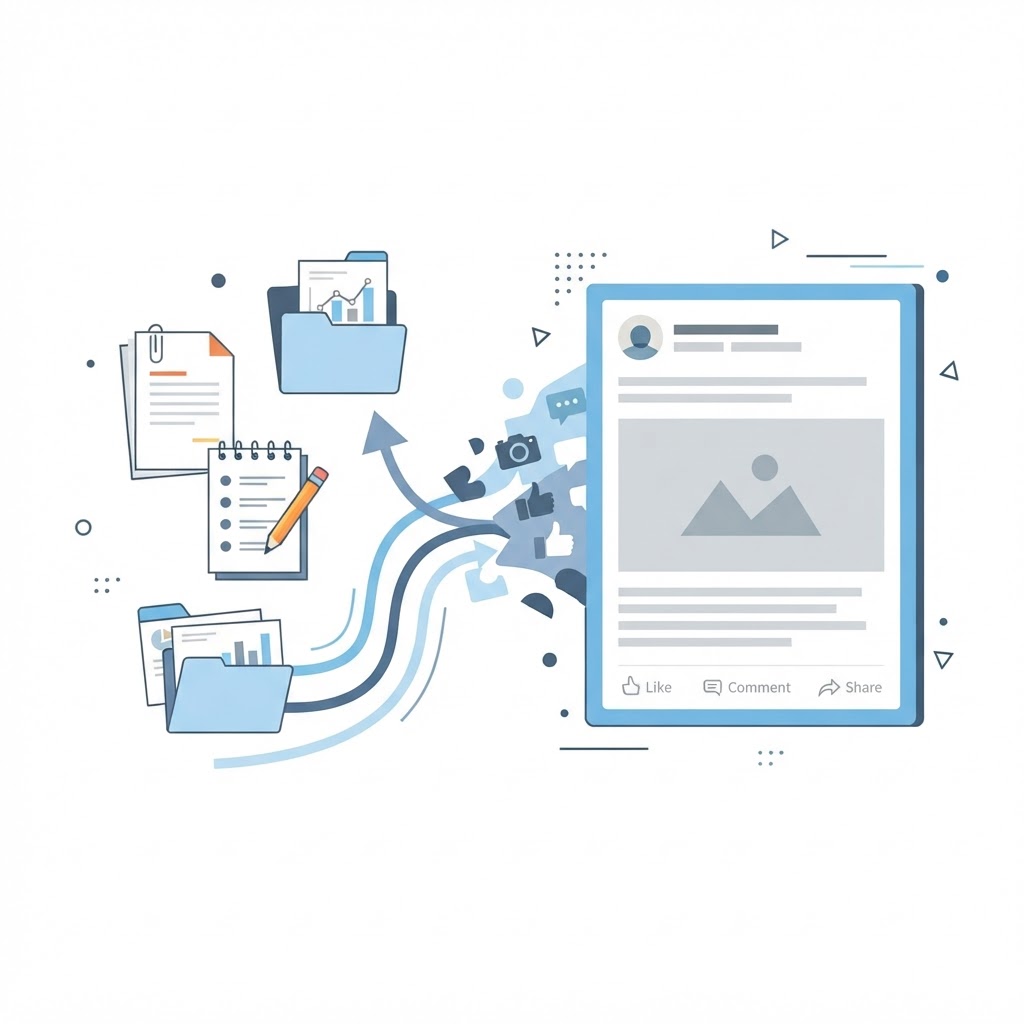
Personal branding becomes stronger when content is connected to experiences that are difficult for competitors to replicate. A founder's real work can produce original observations, customer insights, product lessons, industry opinions, business mistakes, contrarian perspectives, data points, and stories.
The more directly content connects to that underlying experience, the more difficult it is for generic AI generation to reproduce authentically. This is the core principle behind work-to-content workflows. For example, Resonate's content-generation approach is designed around extracting content opportunities from the tools where work already happens. Explore Resonate's LinkedIn content generator.
Turning Slack conversations into LinkedIn posts
Internal business conversations can contain valuable content ideas. A Slack conversation might contain a disagreement, a surprising customer insight, a product decision, a business lesson, a technical explanation, or a new perspective.
The conversation itself does not necessarily become the LinkedIn post. Instead, it becomes source material. The workflow is: Slack Discussion → Insight → Content Angle → LinkedIn Draft. Resonate's guide on turning Slack and GitHub activity into usable post material walks through this exact extraction workflow. See how GitHub and Slack data fuel post ideas.
Why the four criteria work together
The four criteria should not be evaluated independently. They form a complete workflow. Voice makes the post sound like the founder. Idea sourcing makes the post specific to the founder. Pre-publish critique improves the quality before publication. Scheduling makes the workflow repeatable.
Together: Real Work → Relevant Idea → Founder Voice → Quality Review → Scheduled Publication. Remove any stage and some of the original problem returns.
Which AI ghostwriting tool should you choose?
Choose the tool that performs well across the complete workflow rather than the one with the most impressive individual feature. Before subscribing, ask:
- Voice - Does the content actually sound like me?
- Ideas - Are the ideas generated from my real work?
- Critique - Can the system identify weaknesses before I publish?
- Publishing - Can I schedule approved content through a reliable LinkedIn connection?
- Efficiency - How much time does the tool actually save me?
- Control - Can I approve every post before it goes live?
The final test is simple: does this tool remove work from my plate, or does it simply create another AI draft that I have to fix?
Resonate as an AI ghostwriting option for LinkedIn
Resonate is positioned around the four-part workflow described in this article:
- Voice learning to understand how the user writes
- Content generation to create LinkedIn drafts
- AI critique to evaluate content before publication
- Analytics and publishing workflows to support the post-production process
The product also connects to external work sources to help identify content ideas. The appropriate way to evaluate Resonate, or any competing product, is to test the complete workflow using your own writing and your own work rather than relying solely on product demonstrations.
AI ghostwriting tools for LinkedIn: key facts
| Topic | Key fact |
|---|---|
| AI LinkedIn ghostwriter | Software that assists with creating LinkedIn content in a user's voice |
| Core evaluation criteria | Voice, idea sourcing, pre-publish critique, scheduling/publishing |
| Voice modeling | Uses actual writing patterns rather than only generic tone settings |
| Idea sourcing | Extracts content opportunities from real work and business experiences |
| Pre-publish critique | Evaluates content before publication rather than only generating a draft |
| Scheduling | Allows approved content to be queued for publication |
| Human ghostwriter | Provides human judgment, collaboration, and content extraction |
| AI ghostwriter | Focuses on automation, speed, consistency, and scalable content production |
| Content extraction | Converts existing work into potential LinkedIn content |
| Best testing method | Test using your own writing and real business experiences |
| Primary success metric | Time saved while maintaining content quality and authenticity |
AI ghostwriting tool selection framework
The simplest way to evaluate an AI LinkedIn ghostwriter is:
- Voice - Does it sound like me?
- Ideas - Does it know what I actually work on?
- Critique - Can it identify weaknesses before publication?
- Publishing - Can it safely turn approved drafts into a repeatable workflow?
If the answer to all four is yes, the tool is solving substantially more of the ghostwriting process than a basic AI writing assistant. The ultimate goal is not to generate more AI content. It is to make it easier to consistently publish specific, authentic, experience-based LinkedIn content without turning content creation into another full-time job. If you're weighing this decision for your own founder brand rather than in the abstract, see how Resonate approaches this for founders specifically.
Frequently asked questions
What is an AI ghostwriting tool for LinkedIn?
An AI ghostwriting tool for LinkedIn is software that helps create LinkedIn content on behalf of a user. More advanced tools can support idea sourcing, voice matching, content critique, scheduling, publishing, and analytics in addition to generating drafts.
What is the most important feature of an AI LinkedIn ghostwriter?
Voice accuracy is one of the most important features because personal branding depends on authentic and recognizable communication. However, voice alone is insufficient; a strong workflow should also source relevant ideas, critique content, and support publishing.
Do AI ghostwriting tools actually sound like you?
They can more closely reproduce a user's writing style when they are trained or calibrated using representative examples of that person's actual writing. A generic tone setting is not equivalent to modeling an individual's vocabulary, sentence rhythm, structure, and phrasing.
How does AI voice calibration work?
AI voice calibration analyzes patterns in a user's existing writing and uses those patterns to guide future content generation. Resonate's Voice Learning feature is designed to create a model based on the user's writing and use it when evaluating generated content.
Where should an AI LinkedIn ghostwriter get content ideas?
The strongest source of personalized ideas is the user's existing work. Useful sources can include customer conversations, Slack, Notion, GitHub, CRM records, product decisions, and business experiences.
Why is idea sourcing important for LinkedIn ghostwriting?
Idea sourcing determines whether content is genuinely personalized or generic. Ideas extracted from real work are more closely connected to the user's expertise and experiences than generic prompts generated from common trends.
Can AI ghostwriters predict whether a LinkedIn post will go viral?
No AI system can guarantee that a LinkedIn post will go viral. Pre-publish scoring can provide an estimate or critique of potential performance, but actual results depend on many variables, including audience, topic, distribution, timing, and current platform conditions.
What is AI critique for LinkedIn posts?
AI critique is a process in which an AI system evaluates a draft before publication. It can assess factors such as the hook, voice, structure, specificity, and potential engagement.
Are AI ghostwriting tools cheaper than human LinkedIn ghostwriters?
AI ghostwriting tools are generally positioned as a lower-cost alternative to human ghostwriting. The source content states that human LinkedIn ghostwriting commonly costs approximately 1,500 to 2,500 per month, but this figure should be verified before publication.
Should I use an AI ghostwriter or a human ghostwriter?
Use an AI ghostwriter when your primary problem is content production, idea extraction, drafting, voice matching, or workflow efficiency. A human ghostwriter may be preferable when you want high-touch collaboration, strategic judgment, interviews, and human ownership of the content process.
Can an AI ghostwriting tool get my LinkedIn account banned?
The source content warns that tools using browser extensions, cookie-based authentication, or scraping may create account risk. However, account-enforcement claims should be verified against current LinkedIn policies before publication. Before connecting any tool, investigate its authentication method, permissions, publishing architecture, and compliance with LinkedIn's current platform requirements.
What should I test before buying an AI LinkedIn ghostwriting tool?
Test the tool using your own writing and real business experiences. Evaluate voice accuracy, idea quality, source integrations, draft quality, pre-publish critique, publishing method, editing time, analytics, and founder approval controls.
What is the best AI ghostwriting tool for LinkedIn in 2026?
There is no universally best tool for every founder. The strongest choice is the tool that performs well across four core requirements: voice accuracy, real-work idea sourcing, pre-publish critique, and safe scheduling and publishing.

Content Writer @ Resonate
Charlotte explores LinkedIn content, personal branding, AI writing, and founder-led marketing at Resonate. She believes the best content comes from real experience, not generic advice, and writes practical insights to help founders turn what they already know into content that people want to read.
Write LinkedIn content that sounds like you
with Resonate's AI Voice Engine